

One unverified action by even the most capable model never stays local. It writes wrong state that the next step consumes, and in a connected system that single fault cascades, often recoverable only by manual intervention after the damage has spread (InfoQ, Anatomy of a Cascading Failure).
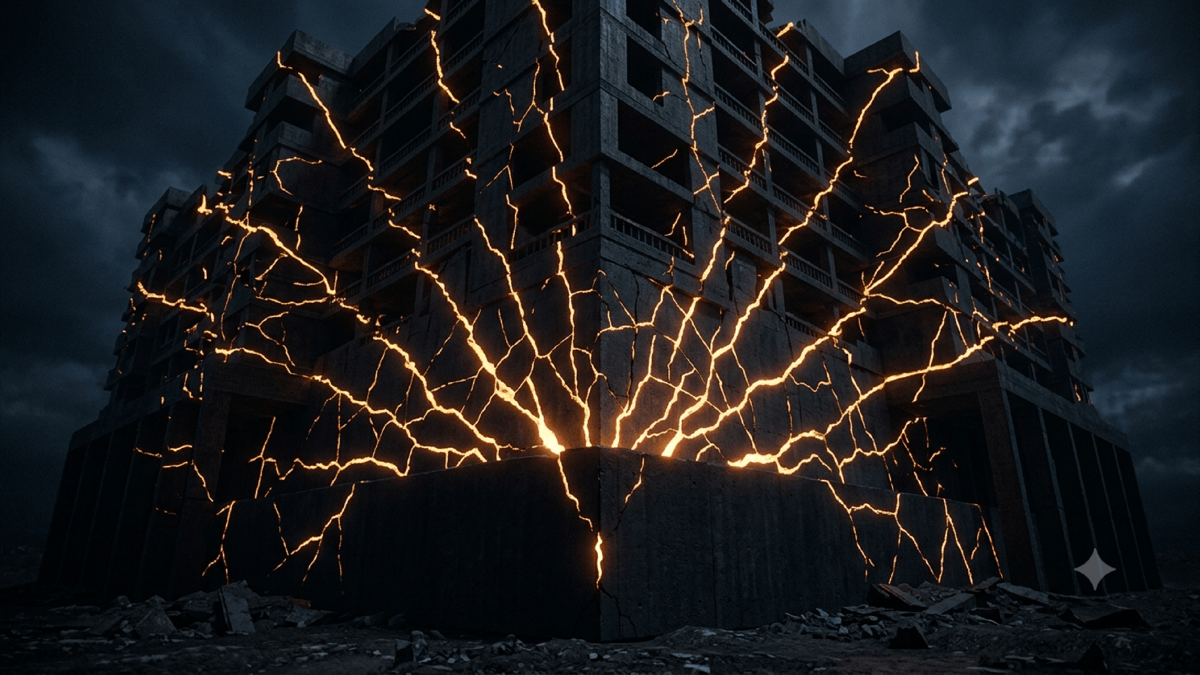
Key facts.
- One unverified action corrupts the state the next step consumes, and in a connected system that single fault cascades, often recoverable only by manual intervention after it spreads (InfoQ, Anatomy of a Cascading Failure).
- Liability lands on the deployer: in May 2026 the German Higher Regional Court of Hamm held a company liable for its chatbot's erroneous statements, treating the AI output as corporate communication (Library of Congress, Global Legal Monitor, 2026).
- The expensive part is downstream: undoing wrong state and everything derived from it dwarfs the cheap call that caused it, containment depends on catching it before anything consumes it (InfoQ).
Why does one unverified action multiply?
It writes state that other things read. An unverified tool call changes a database row, a file, an external system, then the next agent step, a downstream service, or a human process reads that corrupted state and acts on it, inheriting the error and adding its own. This is the compounding that makes long workflows fragile: a small error early, left unchecked, propagates through everything after it. Without verification the divergence is invisible until its accumulated effect surfaces somewhere downstream, by then the single action is the cheap part. Everything built on top of the wrong state before anyone noticed is the expensive part.
What does the compounding actually cost?
Four currencies, each larger than the action that caused it. Rework: undoing a wrong, propagated state change and everything derived from it becomes restoration, review, and lost work, not a single reverted call. Disputes: when the wrong state reaches a customer (a wrong charge, a wrong order, a wrong answer), it becomes a complaint to resolve. Compliance: in regulated data, an unverified action that corrupts a record or violates a rule is an audit and integrity problem, and liability lands on the deployer, a German court affirmed this in 2026 when it held a company responsible for its chatbot's erroneous statements (Library of Congress, 2026). And trust: visible or repeated silent failures slow adoption and raise support and churn. The per-call price is trivial against this stack.
How do you stop the cascade?
Verify before the state propagates, and trace it so you can contain it. Put a verification check between every consequential action and the next step. Assert the resulting state matches intent, so a wrong action gets caught before anything consumes it. Tier actions by risk, gate the destructive, financial, and data-mutating ones behind verification and human approval. Keep an immutable, queryable audit trail linking every state change to its plan and verification result. Add sandboxing and rollback where feasible. Keep the cost of a mistake at the size of a caught check, not the size of the cascade.
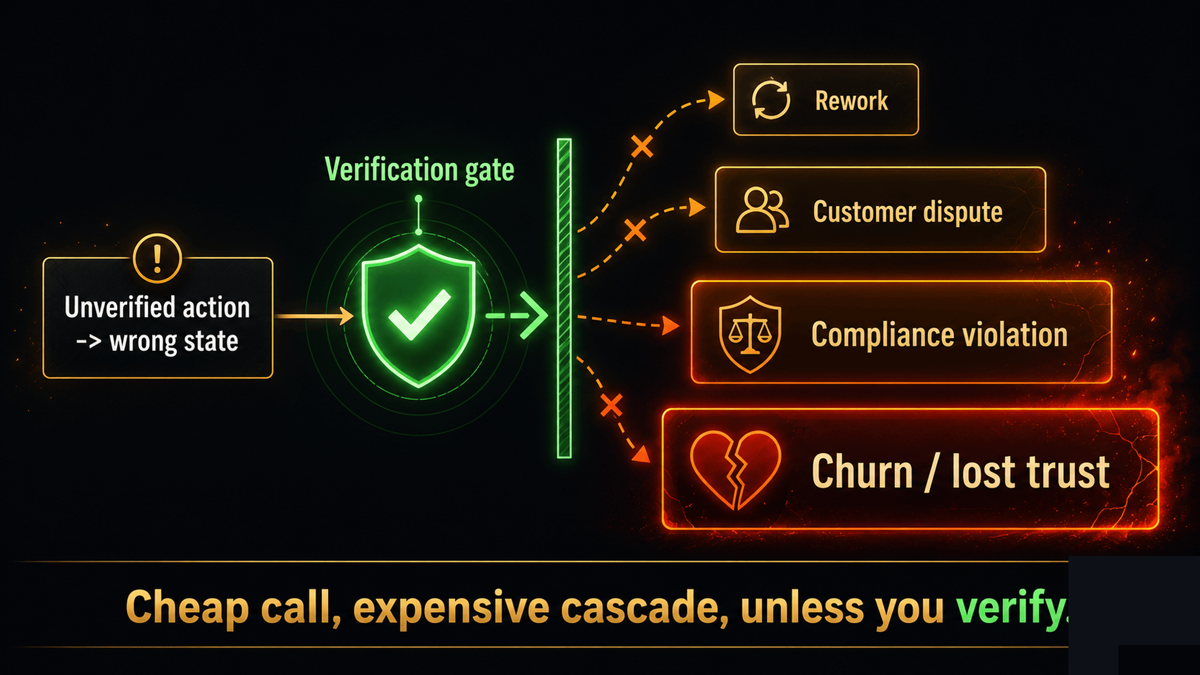
The cost of verifying versus not verifying
| Stage | Unverified action | Verified action |
|---|---|---|
| The action | Cheap, runs unchecked | Cheap + a small check |
| Downstream | Wrong state consumed, compounds | Caught before it propagates |
| Customer | Dispute, churn | No bad outcome reaches them |
| Compliance | Integrity / liability exposure | Auditable, defensible |
| Total cost | Rework + disputes + trust | The cost of the check |
An unverified action writes wrong state that everything downstream inherits, one cheap bad call multiplies into rework, disputes, compliance exposure, and lost trust that dwarf it. Stopping unverified state at the source rather than paying for it downstream is reliability at the pattern level, which is what VibeModel builds as the Pattern Intelligence Layer.
Frequently asked questions
Why is an unverified action so much more expensive than it looks?
It writes state that other steps and people consume. The error compounds downstream into rework, disputes, compliance exposure, and churn. The per-call cost is trivial next to the cascade.
Which actions most need verification?
Destructive, financial, and data-mutating ones, where wrong state propagates furthest and liability is highest. Gate those behind verification and human approval so the costliest mistakes can't run unchecked.
How does an audit trail reduce cost?
It lets you trace a bad outcome to its root cause and measure the blast radius, you contain and undo the damage quickly instead of discovering it piecemeal through disputes and tickets weeks later.