


Key facts.
- Lee and See's work on trust in automation defines appropriate reliance: trust calibrated to a system's actual reliability, neither over-trust nor reflexive distrust. source
- Thinking Machines Lab's "Defeating Nondeterminism in LLM Inference" shows model outputs can differ run to run even at temperature zero, so identical inputs do not guarantee identical answers. source
- Reviews of automation bias show miscalibrated trust produces predictable failures: complacency when people over-trust, aversion when they under-trust. source
- A newer model still varies at temperature zero, so trust rides a track record, not one demo and the cost lands where you skip it. (source)
Why is non-determinism a trust problem, not just a technical one?
People build trust from consistency. A colleague who gives the same sound answer every time earns reliance; one who answers differently each time, even when often right, makes us wary. An agent is the second kind by default. The Thinking Machines result is the uncomfortable proof that this is structural, not a tuning oversight: the same prompt can yield different outputs even at temperature zero. So a high-stakes decision-maker who watches an agent contradict itself is not being irrational by hesitating. They are responding to genuine variability.
The way through is the human-factors answer, not a promise of determinism you cannot keep. Trust should be calibrated to the agent's measured reliability on the specific kind of work, so the person knows where to rely and where to verify. That requires showing a track record rather than a demo and designing the agent so its behavior on a given situation is consistent enough to earn calibrated trust, even if the raw tokens vary.
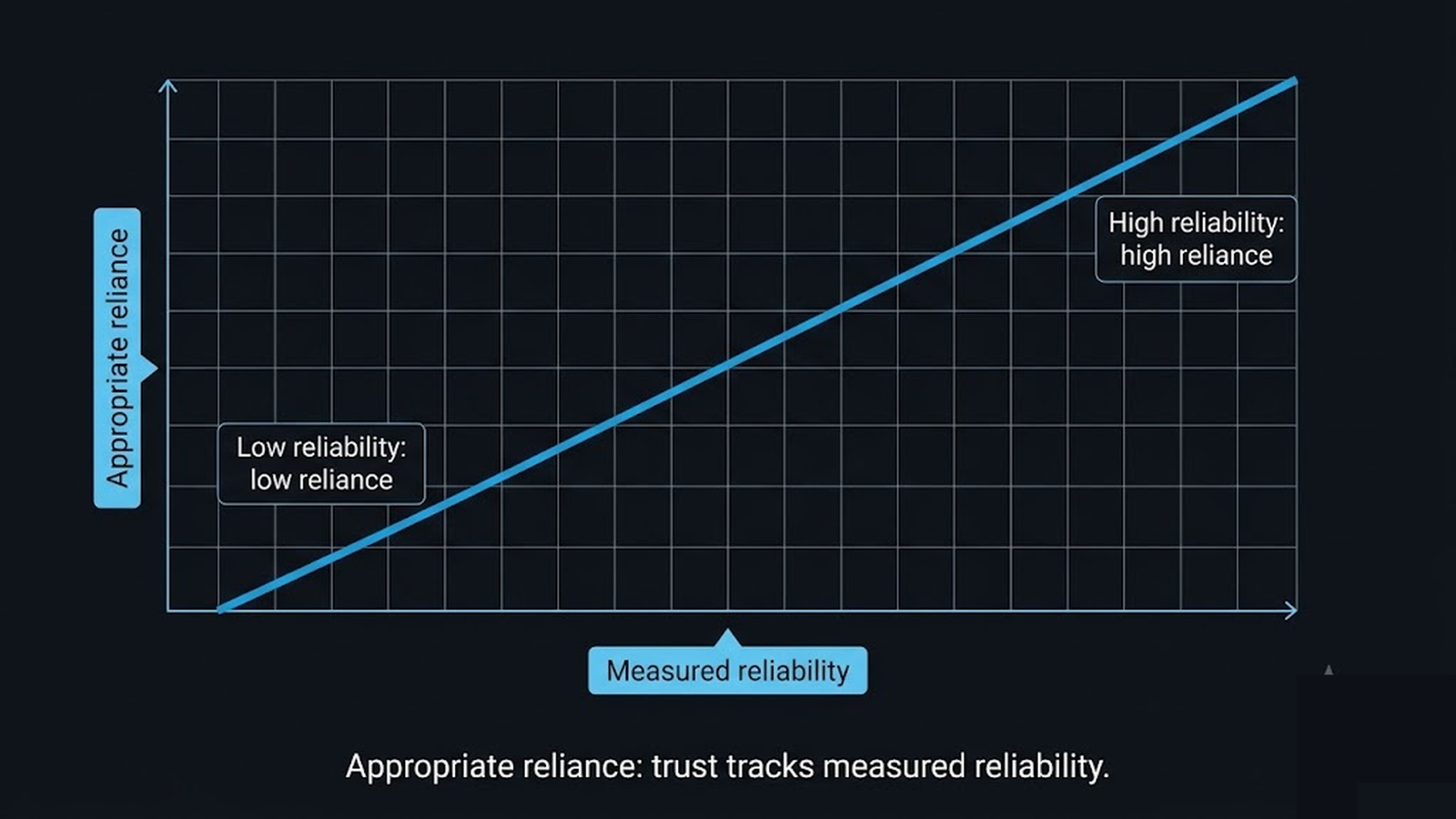
How do you make trust calibrated, not blind?
| Approach | Blind faith | Blanket distrust | Calibrated reliance |
|---|---|---|---|
| Basis | One good answer | One bad answer | Measured track record |
| Where used | Everywhere | Nowhere | Where it is reliable |
| Outcome | Silent failures | Wasted agent | Value with safety |
Calibrated trust needs consistent behavior at the level people actually care about, which is the situation, not the token stream. VibeModel is the Pattern Intelligence Layer because it makes the agent handle the same situation the same correct way every time, turning raw non-determinism into pattern-level consistency. That is what lets a high-stakes team extend appropriate reliance to an agent that, underneath, never answers in exactly the same words twice.
Frequently asked questions
Can you make an agent fully deterministic?
Not reliably. Work like Thinking Machines Lab's shows outputs can vary even at temperature zero, so trust has to be built on calibrated reliability, not on identical answers.
What is appropriate reliance?
Trusting the agent where its measured reliability is high and verifying where it is not, instead of trusting everything or nothing.
How do you show reliability to skeptics?
With a track record on their kind of work, not a demo. Calibration comes from evidence over time.