

Key facts.
- A 2025 survey found 72% of companies now use AI but 55% say they lack the training and resources to use it well, a gap between deployment and capability.source
- EY's 2025 research found companies miss up to 40% of AI productivity gains because of talent and adoption gaps, much of it untrained users and overseers.source
- HammerBench finds LLMs frequently hallucinate function and parameter names in tool calls, a failure that looks plausible and needs a trained eye to catch.source
Why is untrained oversight no oversight?
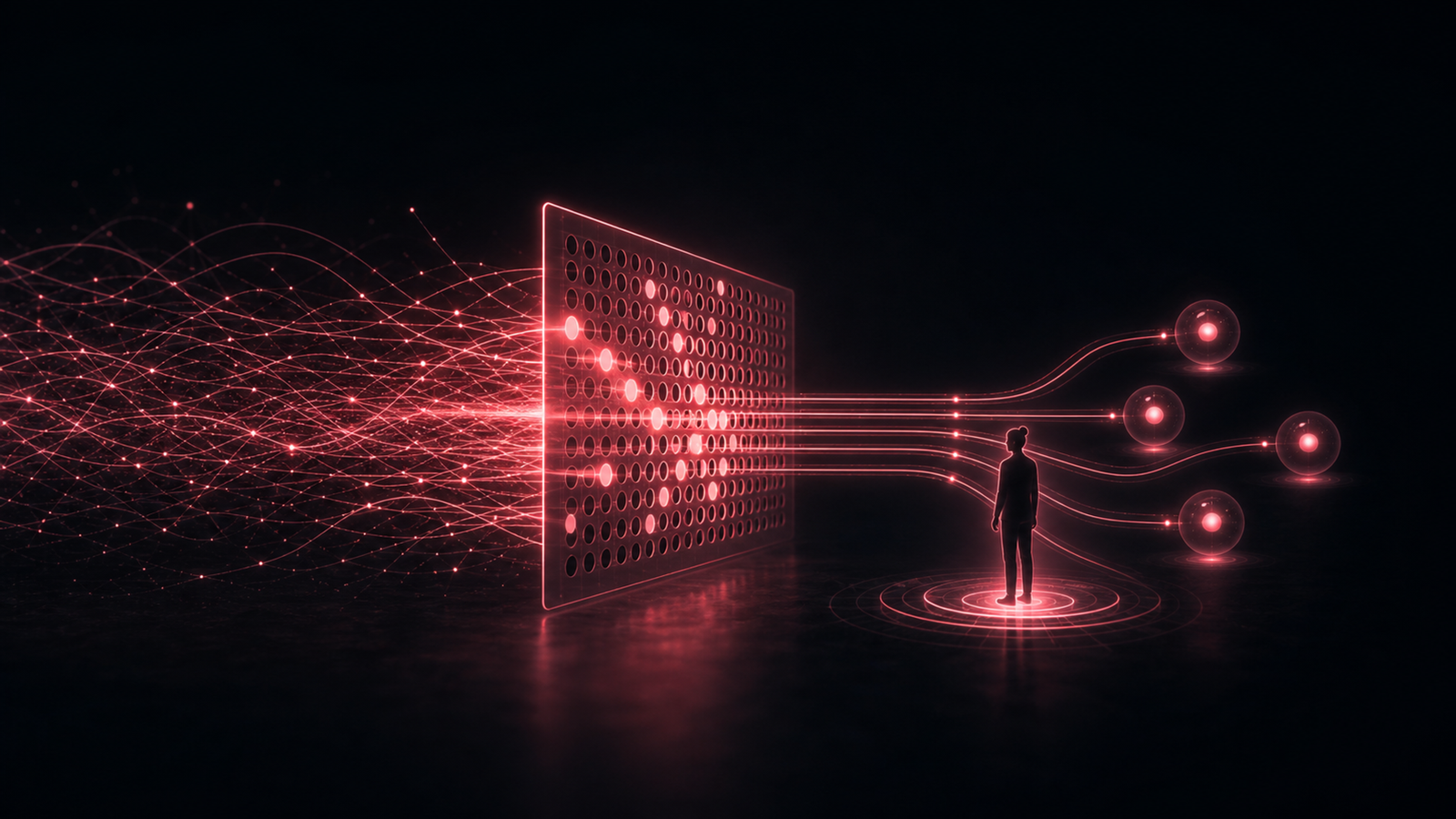
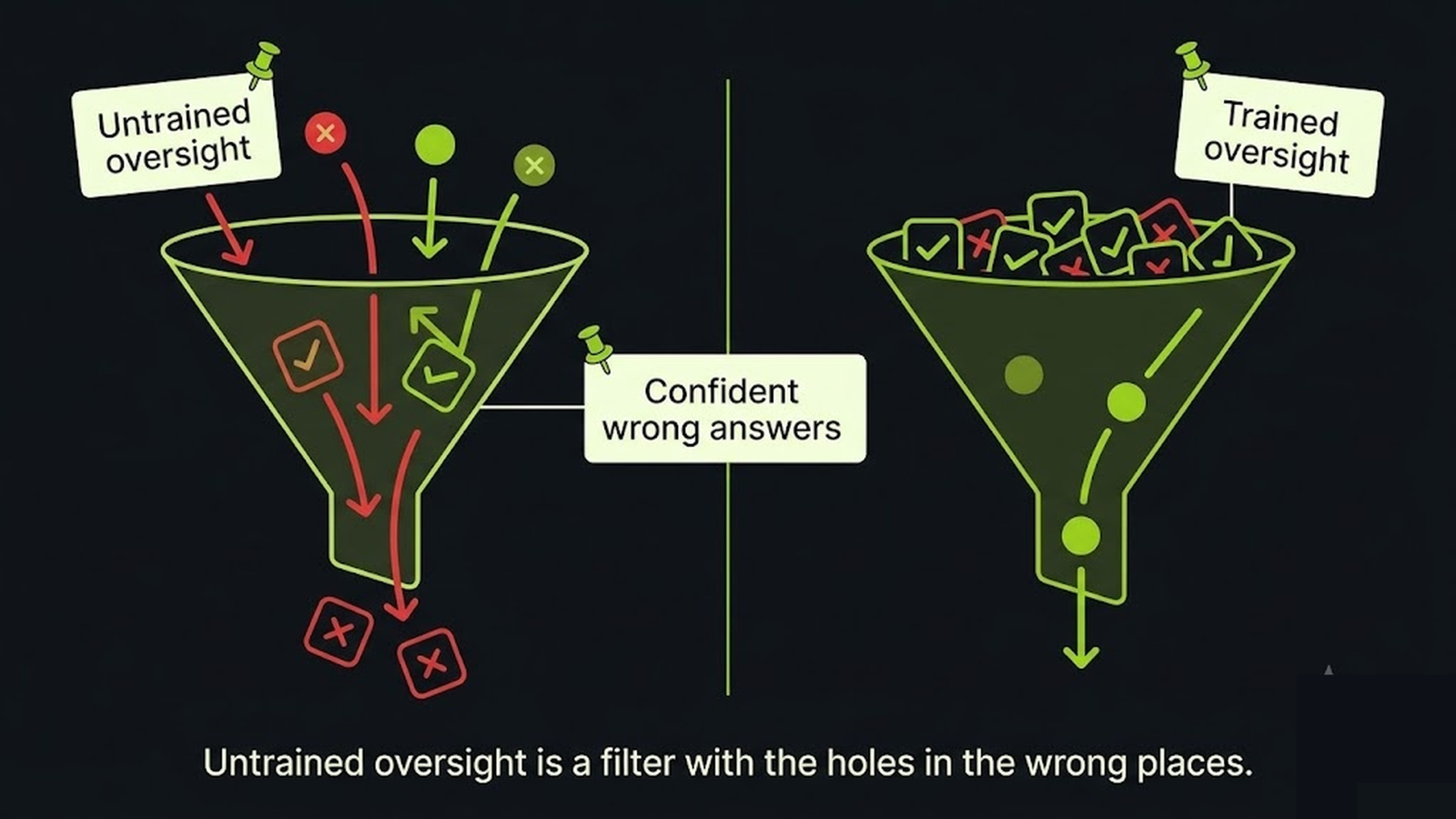
Putting a human in the loop is the standard answer to agent risk and it is the right instinct. But the loop only works if the human knows what a failure looks like. Agent mistakes are rarely a crash. They are a confident wrong answer, a tool call with a fabricated parameter. A plan that sounds reasonable and is subtly off. An overseer who was handed the agent with no training will approve those because they look fine. The HammerBench failure mode is exactly this: the call is well-formed and wrong and only someone taught to check the specifics catches it.
This is why deployment is outrunning capability. The ExpressPros split is stark: most companies have the tools. Most lack the training to use them and the gap shows up as oversight that rubber-stamps instead of catching. The EY number puts a price on it, with up to 40% of gains lost partly because the people around the agent were never equipped to get value from it or guard against its mistakes.
What should the training actually cover?
| Skill | Untrained overseer | Trained overseer |
|---|---|---|
| Spotting failure | Looks for crashes | Looks for confident wrong answers |
| Checking tool calls | Trusts well-formed output | Verifies parameters and results |
| Knowing when to step in | Guesses | Has clear escalation triggers |
| Improving the agent | No feedback path | Feeds corrections back |
Training is the human half of reliability. The system half is making the agent's behavior legible enough that a trained person can actually check it. VibeModel is the Pattern Intelligence Layer because it surfaces the patterns an overseer needs to judge. The same situation is presented the same way every time and a trained eye knows exactly where to look. Teach the people, make the agent legible and oversight stops being a rubber stamp.
Frequently asked questions
Does a more capable model remove the need to train overseers?
Oversight is learned; a more capable model raises the need and untrained staff miss bad calls, a rework. (arXiv:2412.16516)
Is generic AI literacy enough?
No. Overseers need role-specific training on what failure looks like in their workflow and when to intervene, not a general intro to prompting.
Why does training need to be ongoing?
Because models, tools and failure modes keep changing. A one-time session goes stale fast; the overseer's mental model has to keep up.
Does training reduce the value of human oversight?
It is what creates the value. An untrained overseer approves the confident wrong answers a trained one catches.