

Key facts.
- Lee and See's "Trust in Automation" established that reliance follows trust and that miscalibrated trust under load produces automation complacency, over-relying on the system exactly when scrutiny is needed. source
- Reviews of automation bias find that elevated trust combined with cognitive load or time pressure pushes people to privilege automated advice over their own judgment, while added verification effort reduces complacency. source
- On HammerBench, models frequently produce tool calls with hallucinated function or parameter names, plausible-looking outputs that an overloaded overseer approves. source
Why does cognitive load break the loop?
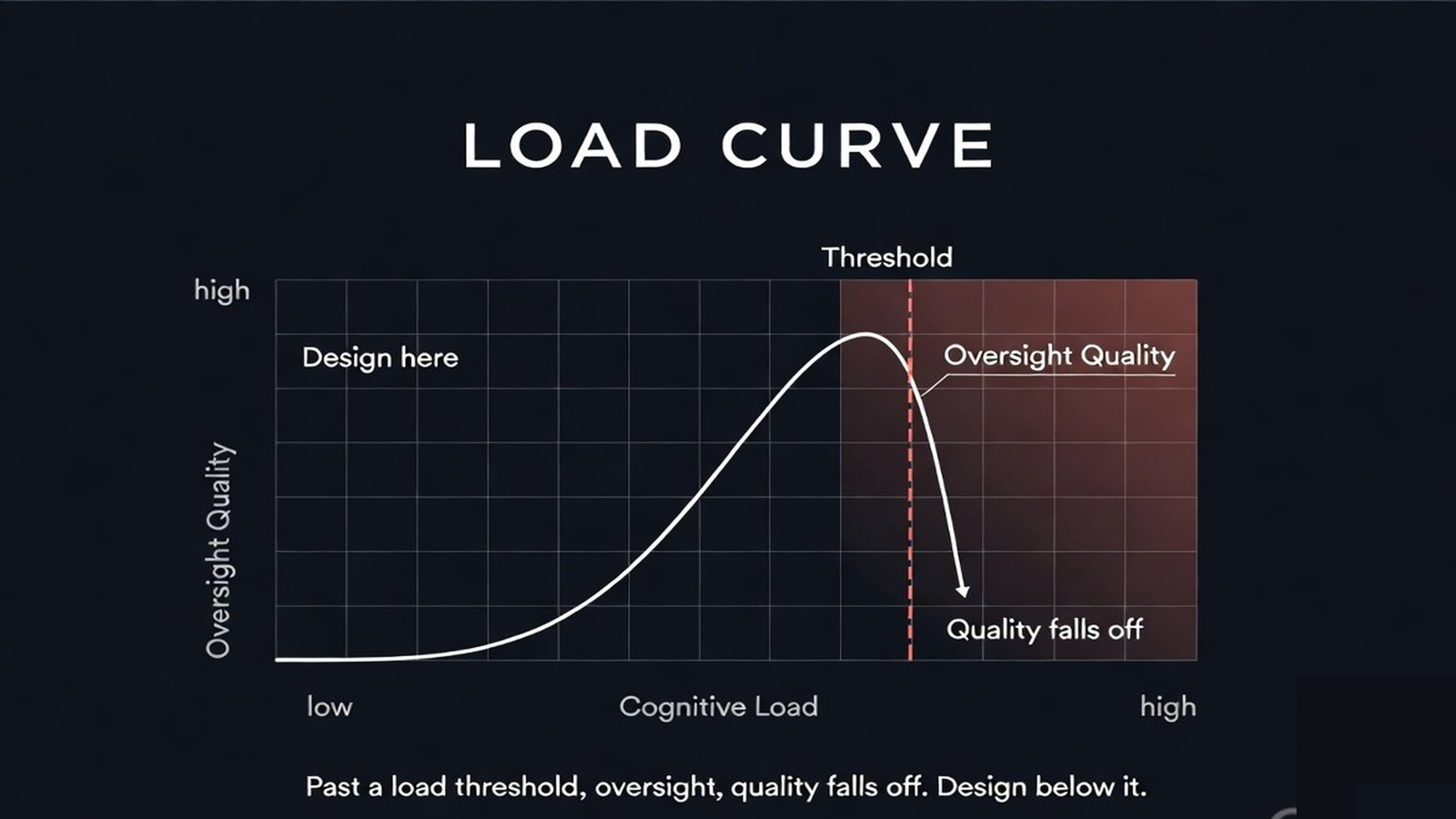
Human attention is a budget and an overseer asked to review every agent action spends it on volume instead of judgment. The human-factors literature is blunt about what happens next: under load, trust drifts away from calibration and toward complacency and the person starts approving by default because scrutinizing each item is impossible. The loop looks intact on the org chart and is open in practice. The HammerBench failure mode is what slips through: a tool call that is well-formed and wrong, exactly the thing that survives a tired glance and fails a careful look.
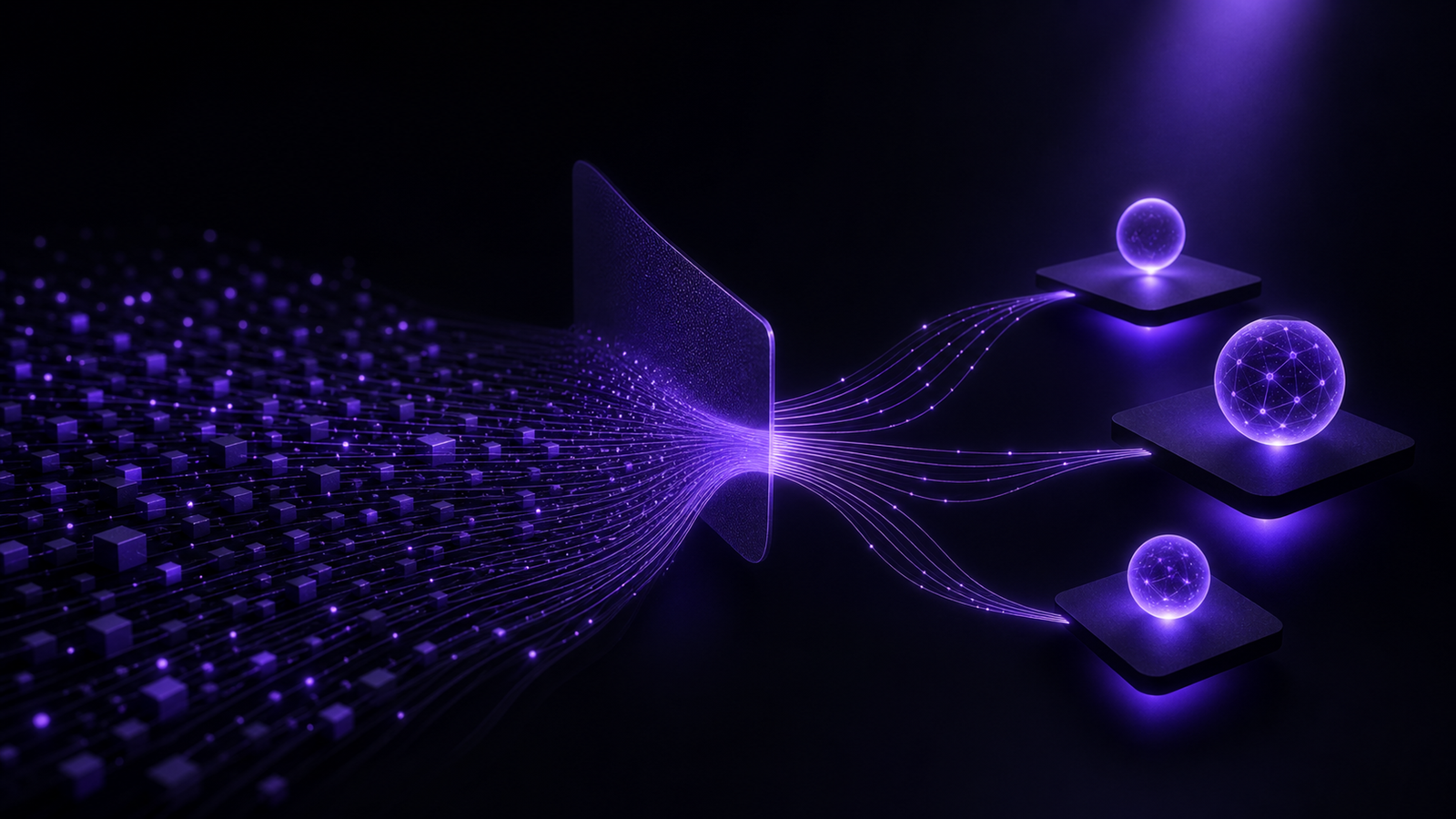
The fix is to design the loop around the attention the human actually has. Route the routine, low-consequence actions to run unsupervised and reserve the human for the decisions where their judgment changes the outcome. Integrate the review into their workflow instead of bolting on a separate queue. The goal is calibrated trust at a sustainable load, not a heroic overseer who burns out and rubber-stamps.
What does load-aware oversight look like?
| Design choice | Overloaded loop | Load-aware loop |
|---|---|---|
| What the human reviews | Every action | The decisions that matter |
| Where review happens | A separate queue | Inside the workflow |
| Trust state | Complacent by default | Calibrated to reliability |
| Result | Rubber-stamp | Real catches |
Designing for the human's attention requires knowing which decisions actually carry consequence and that is a pattern judgment. VibeModel is the Pattern Intelligence Layer because it can route by consequence at the pattern level, sending the routine patterns through and surfacing the high-stakes ones to a human who still has the attention to judge them. That is how the loop stays closed without asking the overseer to be superhuman.
Frequently asked questions
Does a more capable model let us thin out human oversight?
An overloaded overseer is a muted smoke alarm; a newer model does not lighten it, so HammerBench's bad params get waved through, late. (arXiv:2412.16516)
Is more human review always safer?
No. Past a load threshold it is less safe, because the overseer complacently approves everything. Calibrated, consequence-based review beats blanket review.
What is automation complacency?
Over-relying on an automated system, especially under load, so you stop scrutinizing its output and miss the errors you were there to catch.
How do you reduce overseer load?
Let low-consequence actions run unsupervised, surface only high-consequence decisions and embed review in the existing workflow rather than a separate queue.