


Key facts.
- Research on the dark side of AI adoption links it to employee wellbeing through psychological safety and ethical leadership, so structural change carries human stakes. source
- Even LLM-judge verification carries systematic biases, with twelve quantified, so the oversight roles a working agent creates are genuinely skilled work. source
Why plan for the after?
A working agent redraws roles either way and a newer model does not erase LLM-judge bias, so the unplanned reorg costs most. (arXiv:2410.02736)
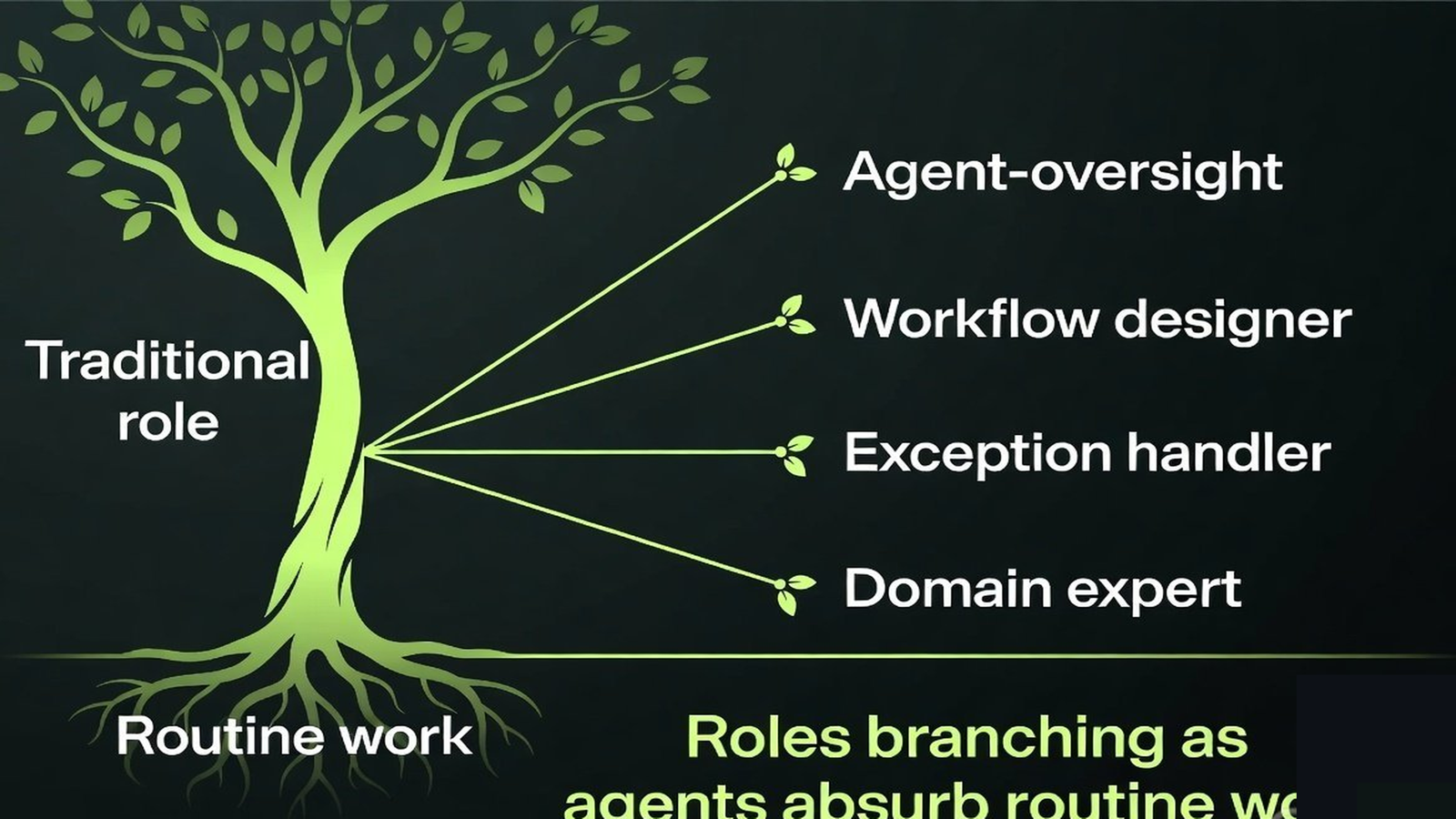
A successful agent does not leave the organization unchanged. Routine work shrinks, judgment and oversight grow, new roles appear and the shape of teams shifts. This happens whether or not anyone planned it. The choice is between steering the change, deciding deliberately how roles evolve, what skills people move toward, how teams restructure and reacting to it, letting the org reorganize itself through attrition, confusion and quiet morale damage. The Nature research is the reminder that the stakes are human: how the change is led affects wellbeing through psychological safety, so an unplanned reshaping is not just inefficient, it harms people.
Planning for the after also means taking the new roles seriously as skilled work, not consolation prizes. The oversight and verification jobs a working agent creates are demanding, because checking an agent is genuinely hard, even using a model to do it carries the systematic biases the "Justice or Prejudice" work catalogs. An organization that treats these as real careers, with training and progression, retains the expertise it needs and gives people a place to go as routine work shrinks. One that ignores the after loses that expertise and reorganizes by accident.
What shifts and how do you steer it?
| Dimension | Unplanned | Steered |
|---|---|---|
| Routine roles | Cut by attrition | Redrawn toward judgment |
| New oversight roles | Unfilled | Real careers with training |
| Skills | Drift | Deliberately developed |
| People | Wellbeing harmed | Change led with safety |
Steering the structural change well depends on seeing clearly which work the agent reliably handles and which still needs people, which is what the Pattern Intelligence Layer makes visible. VibeModel surfaces that boundary at the pattern level, so you can redraw roles around where humans add judgment and where the agent is dependable and the long-term reorganization is something you design rather than something that happens to you.
Frequently asked questions
Why not deal with the org change later?
Because it happens whether you plan or not. An unplanned reshaping reorganizes through attrition and confusion and, per the research, can harm wellbeing.
Are the new oversight roles real jobs?
Yes. Checking an agent is hard skilled work, even model-based verification carries systematic biases, so these should be careers with training, not afterthoughts.
How do you redraw roles well?
Around the boundary of where the agent is reliable and where people add judgment, made visible at the pattern level.