

Key facts.
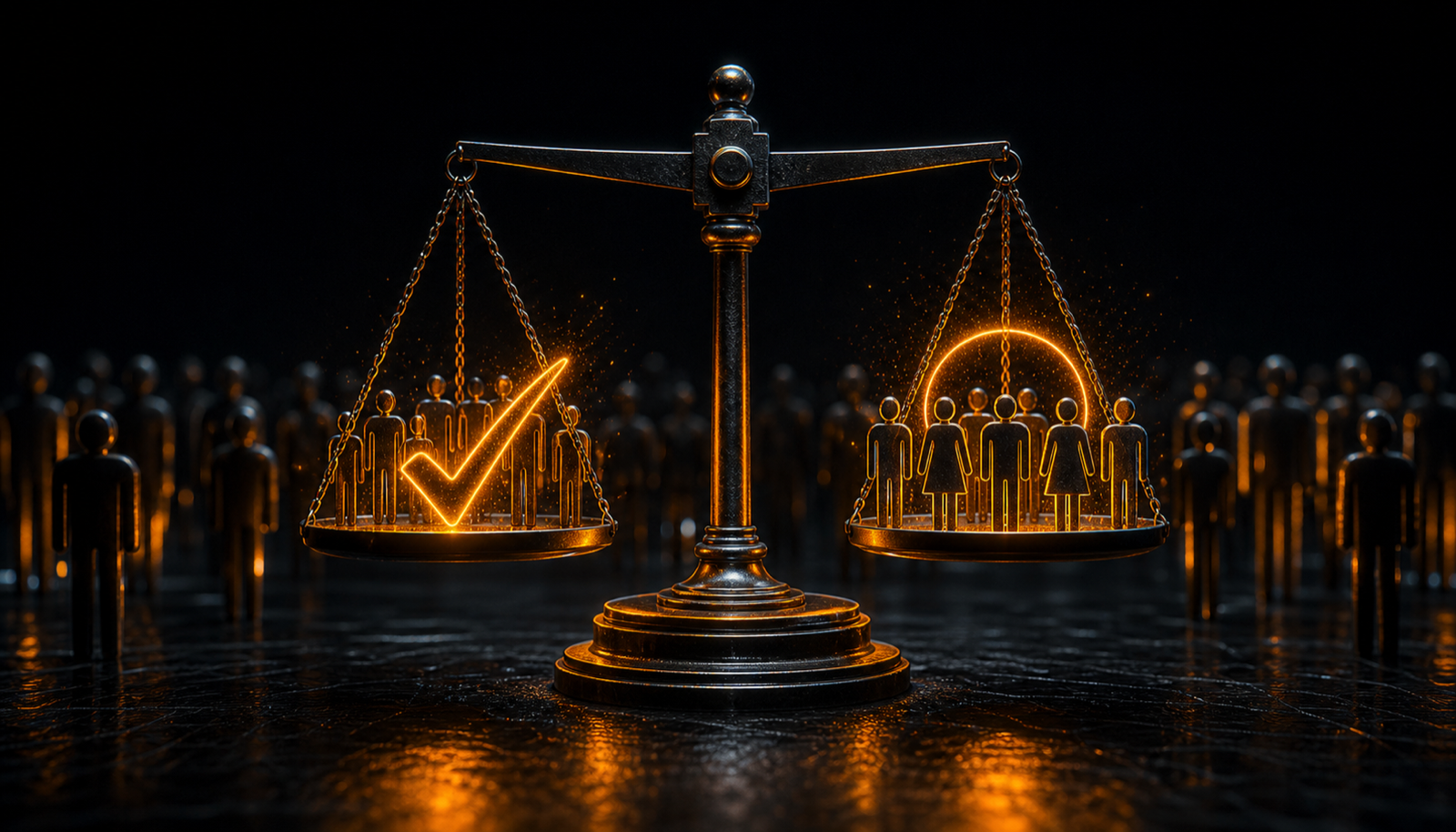
- NYC Local Law 144 requires automated employment decision tools to undergo an annual independent bias audit for disparate impact across protected categories, with public reporting and candidate notice.source
- The law is enforced by the NYC Department of Consumer and Worker Protection with per-violation penalties.source
- HR outcomes carry a legal fairness obligation, so verifying the action happened is needed but not sufficient.source
Why does HR need two kinds of verification?
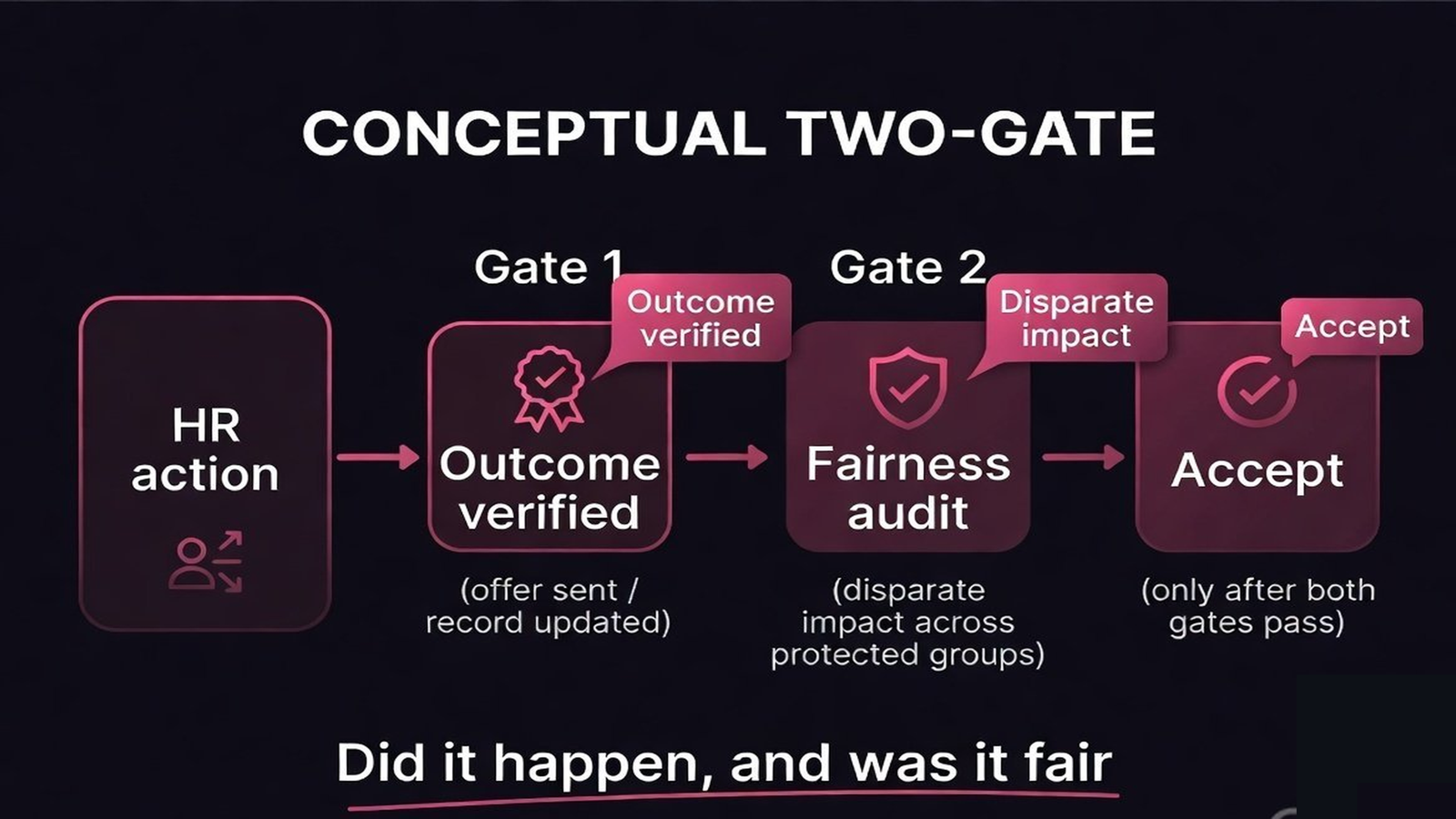
HR agents have two ways to fail. The first is the ordinary one every agent has: the action didn't actually execute. Offer didn't send. Record didn't update. That's bad but fixable. The second one is specific to HR: the action executed correctly and is still legally wrong. Local Law 144 exists because an automated hiring tool can complete every decision technically without error and still show disparate impact across protected groups. That impact is the violation. Not a bug in execution. A pattern in outcomes. An agent that sends a thousand offers without a single failure can still be non-compliant if those offers landed systematically with one demographic over another. Verifying that each offer sent doesn't tell you whether the selection pattern was fair.
New York City made the second check mandatory. Independent bias audit, annually. Disparate impact analysis across protected categories. Public reporting. Candidate notification. The audit results are public because compliance isn't self-reported. An HR agent operating in NYC without that audit is out of compliance regardless of how correctly it executed its tasks.
What does two-axis verification require?
Confirm the action and audit the fairness. Verify that the HR action actually completed in the system of record: the offer sent, the record updated, the onboarding finished. That's the same outcome verification any agent needs. Then audit the agent's decisions for disparate impact across protected groups, on the cadence and with the independence the law requires, and act on the results. A tool that shows disparate impact must be fixed or retired. Build both checks in. The law treats the fairness audit as mandatory, and the ethics demand it regardless of jurisdiction. An HR agent is verified when its actions are both real and fair, not when they merely completed.
| Verification scope | What it confirms |
|---|---|
| Outcome only | The action happened |
| Outcome plus fairness audit | The action happened and is non-discriminatory |
NYC's Local Law 144 mandates an annual independent bias audit; a more capable agent correct but unaudited is non-compliant, a late cost. (source)
Building both verifications is part of what VibeModel does as the Pattern Intelligence Layer. We model the patterns of a completed HR action and the disparate-impact tests fairness requires. An HR agent's outputs are verified as both real and fair rather than merely finished.
Frequently asked questions
Is fairness verification really mandatory?
In jurisdictions like New York City, yes. Local Law 144 requires an annual independent bias audit of automated employment decision tools, with public reporting.
Why isn't completing the action enough?
Because a correctly completed action can still produce disparate impact, which is the legal violation regardless of execution.
Who audits the fairness?
The law requires an independent auditor and public reporting, so the fairness check cannot be a self-graded internal note.