


Key facts.
- McKinsey's 2025 survey found inaccuracy the most cited AI risk, with nearly one-third of organizations reporting negative consequences from it. source
- HR agents touch pay, benefits, privacy and evaluations, so the stakes of an error are personal and the wariness is rational. source
- Trust in an HR agent is earned through transparency and demonstrated fairness, not assumed because the technology improved. source
Why is HR resistance different?
Because HR touches the things people most need to get right and the documented risk of AI inaccuracy gives them a real reason to worry. An employee resisting an HR agent is not a technophobe; they are someone whose pay, benefits, privacy and fair evaluation are now partly in the hands of a system that, per the McKinsey finding, has inaccuracy as its most cited risk. They have heard about AI getting things wrong, they know an error here lands on their paycheck or their career and they reasonably want assurance before they trust it. Treating this as irrational resistance to be managed away is the mistake, because the wariness is well-founded and dismissing it destroys the trust the rollout depends on. The resistance is a rational response to consequence and uncertainty and the only thing that resolves it is evidence that the agent is accurate, fair and accountable, which is earned, not asserted.
This reframes change management for HR agents. The job is not to convince people the technology is fine; it is to demonstrate, transparently, that this specific agent handles their pay correctly, protects their privacy and treats them fairly and to give them recourse when it does not. Trust built that way is durable; trust demanded on the basis of capability is not.
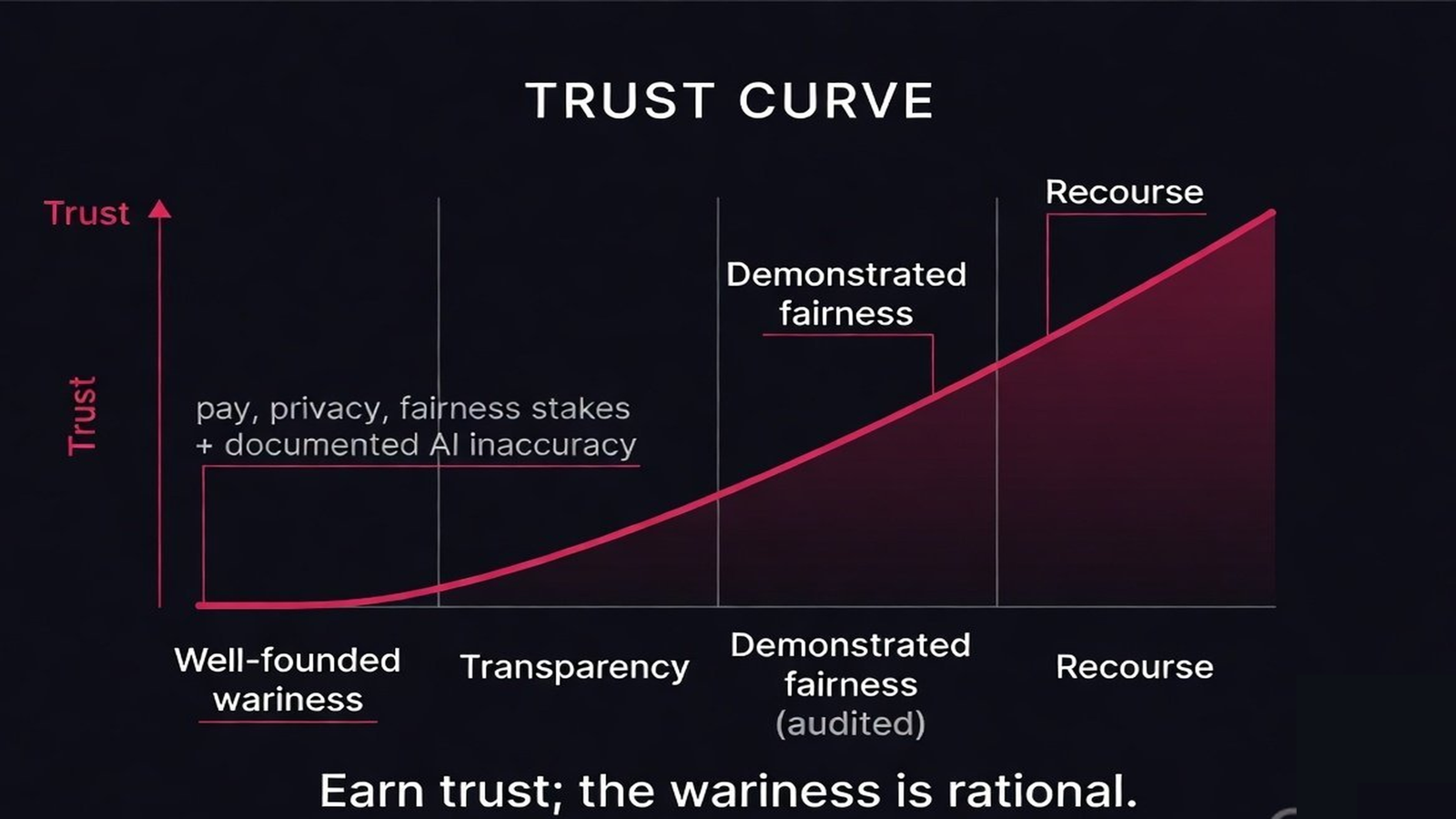
What earns the trust?
Transparency, demonstrated fairness and recourse. Be transparent about where the agent is used and how it makes decisions, so employees are not surprised by an automated system touching their pay or evaluation. Demonstrate fairness with the kind of bias audit regulation increasingly requires and share the results, so the claim of fairness is evidenced rather than asserted. And provide clear recourse, a human to appeal to, a way to correct an error, so the consequence of the agent being wrong is bounded. These address the actual reasons for resistance, the personal stakes and the documented risk, rather than treating wariness as an obstacle to push through.
| Rollout approach | Result |
|---|---|
| Assert the technology is fine | Resistance hardens, trust is not earned |
| Transparency, evidenced fairness, recourse | Well-founded wariness is answered |
Demonstrating that fairness and accuracy is part of what VibeModel does as the Pattern Intelligence Layer. We model the patterns that let you show an HR agent is accurate and fair, so the rollout earns the trust the personal stakes demand instead of asserting it.
Frequently asked questions
Is the resistance irrational?
No. HR agents touch pay and fairness, and AI inaccuracy is a documented risk, so the wariness is well-founded and must be answered with evidence.
What earns employee trust?
Transparency about use, demonstrated and audited fairness and clear recourse when the agent is wrong, not assurances about capability.
Why not just manage the change?
Because the concern is rational. Dismissing it destroys trust; addressing the real stakes builds it.