


Key facts.
- Research on psychological safety as the key to AI transformation finds safety predicts adoption and engagement with AI tools. source
- Managers who created safety around experimentation saw employees report up to 20 points higher AI readiness and become 1.4 times more likely to be high-frequency users. source
- Thinking Machines Lab shows LLM outputs can vary run to run even at temperature zero, so an agent failure is a system property, not the fault of whoever reported it. source
Why does blame drive failures underground?
An agent fails where people can see it: a wrong answer to a colleague, a bad action in a shared workflow. What happens next depends on the culture. If surfacing the failure is safe and treated as a signal to improve the system, the mistake becomes a correction and the agent gets better. If reporting it invites blame, on the user for trusting the agent, on the builder for shipping it, people stop reporting. The failures do not stop; they go quiet, accumulating until one becomes too big to hide and far more expensive than it would have been caught early. The psychological-safety research is the evidence that the safe path also drives the adoption you want, with measurable jumps in readiness and usage.
Blame is especially wrong-headed for agents because the failures are frequently systemic. The Thinking Machines result is the clearest illustration: the same input can yield different outputs even at temperature zero, so an inconsistency is the system behaving as systems do, not a person's error. A culture that punishes the report of such a failure is punishing someone for telling the truth about the system, which teaches everyone to stop telling it. Blameless surfacing is not softness; it is the only way to get the information you need to make the agent reliable.
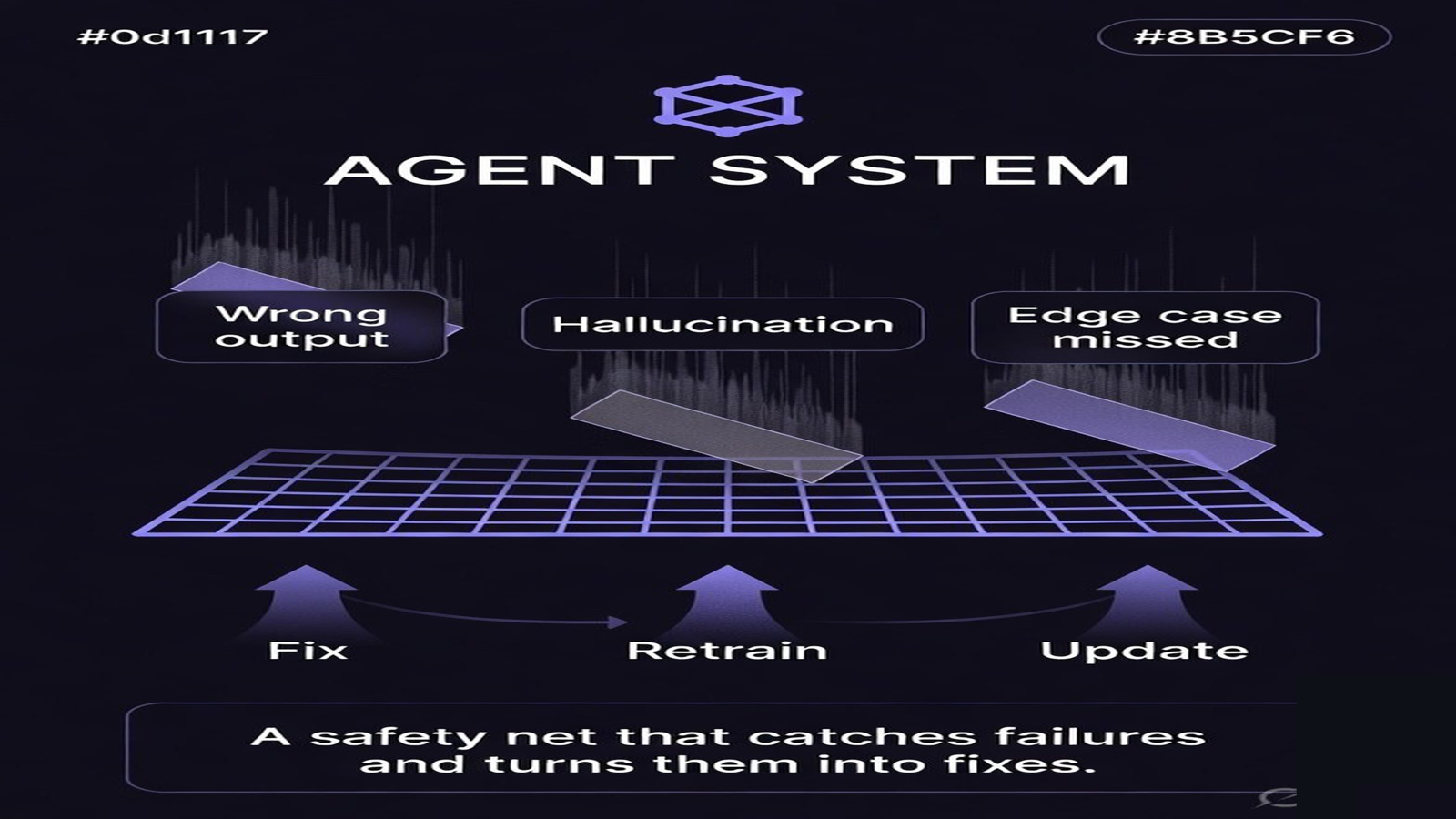
What does a blameless agent culture do?
| Practice | Blame culture | Learning culture |
|---|---|---|
| When a failure appears | Find who to blame | Find the system signal |
| What people do | Hide failures | Surface them early |
| The agent | Stagnates | Improves quickly |
| Adoption | Stalls | Readiness and use rise |
Hidden failures grow expensive; a bigger model still varies at temperature zero, so the fault is systemic and surfacing it early beats finding it late. (arXiv:2602.23279)
Turning surfaced failures into fixes works best when each failure maps to a pattern you can correct, which is what the Pattern Intelligence Layer provides. VibeModel makes the agent's behavior legible at the pattern level, so a blamelessly reported failure points to the specific pattern to repair and the learning culture has somewhere concrete to put what it learns instead of a vague sense that the agent is unreliable.
Frequently asked questions
Isn't someone responsible when the agent fails?
The system is. Agent failures are often systemic, like outputs varying at temperature zero, so blaming the reporter just hides the signal you need to fix it.
Does psychological safety really help adoption?
Yes, measurably. Research ties experimentation safety to up to 20 points higher AI readiness and 1.4x more high-frequency users.
How do you build it?
Make surfacing failures safe and useful: treat each as a system signal to fix, credit the report and show the fix land.