


Key facts.
- Forrester analysis found about half of RPA programs stalled once process variability exceeded what the automation was scripted for, a readiness gap more than a technology gap. source
- EY has reported initial RPA project failure rates of 30 to 50%, with the difference between success and failure often sitting in process and people, not the tool. source
- On WebArena, the best agent completes 14.4% of real web tasks versus 78.2% for humans, so a function that is not ready to supervise and correct it will not get value from it. source
Why does readiness vary so much inside one company?
Thriving in one team and dying in the next is a fit problem a more capable model makes easy to misread, a rework. (arXiv:2307.13854)
Two teams in the same building can sit at opposite ends of the readiness spectrum. One has clean, documented processes, a manager who has run technology change before and people who see the agent as relief from drudgery. The next has tribal knowledge no one wrote down, a history of tools imposed and abandoned and staff who read the agent as a threat. Drop the identical agent into both and you get a success story and a cautionary tale and the only difference was readiness. Treating the organization as uniformly ready is how a promising pilot picks the wrong first home and dies there.
The RPA history is the cleanest evidence we have. The programs did not mostly fail on code; they failed where process variability and human readiness were underestimated. Agents inherit that lesson and raise the stakes, because an agent is less scripted and more dependent on human judgment around it. The WebArena gap is the reminder that the agent cannot carry an unready function on its own.
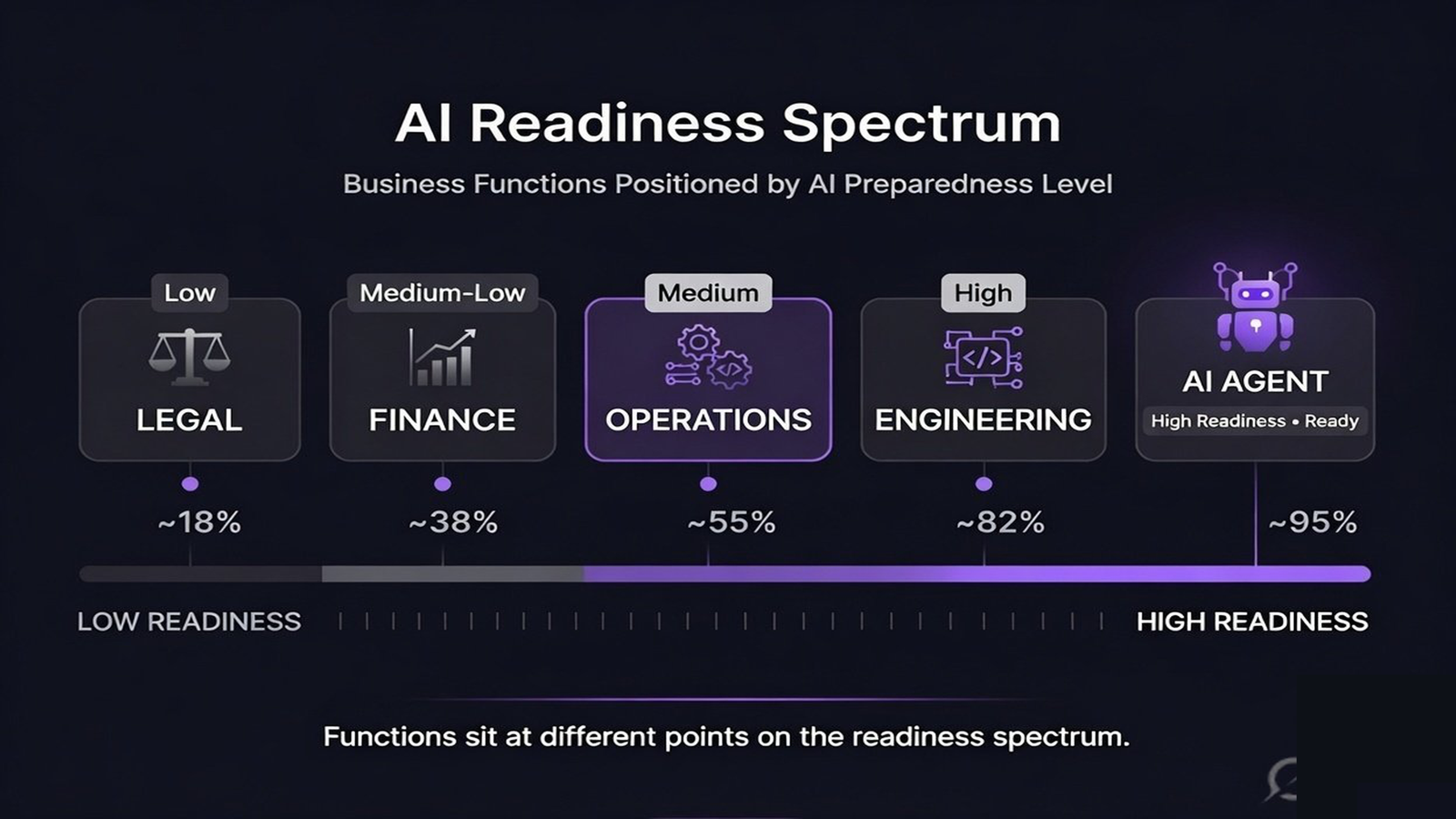
How do you read readiness before you deploy?
| Signal | Low readiness | High readiness |
|---|---|---|
| Process | Tribal, undocumented | Documented, stable enough to teach |
| History | Abandoned past tools | Has absorbed change before |
| People | See a threat | See relief from drudgery |
| Right first move | Build readiness first | Deploy and prove value |
Reliability is what lets you turn a ready function into a reference others trust. When the agent handles that team's work the same correct way every time, the win becomes evidence you can carry to the harder teams. VibeModel is the Pattern Intelligence Layer because reliability at the pattern level is portable proof, the thing that moves a skeptical function from low readiness to willing adopter without a fight.
Frequently asked questions
Should I wait until every team is ready?
No. Start where readiness is highest, win there and use that proof to bring the rest along. Waiting for universal readiness means never starting.
How is this different from the RPA era?
The pattern is the same, the stakes are higher. Agents depend more on human judgment around them, so an unready function fails an agent faster than it failed a scripted bot.
Can you raise a team's readiness?
Yes, by documenting the process, addressing the fear and showing a quick win. Readiness is a starting condition you can improve, not a fixed trait.