


Key facts.
- MIT's NANDA State of AI in Business 2025 found roughly 5% of enterprise generative AI pilots delivered measurable profit-and-loss impact, the gap a readiness check exists to predict. source
- On tau2-bench, frontier models pass only about 34 to 49% of difficult multi-turn tool tasks, so an organization that cannot supervise and correct that will not get value at scale. source
What does readiness actually measure?
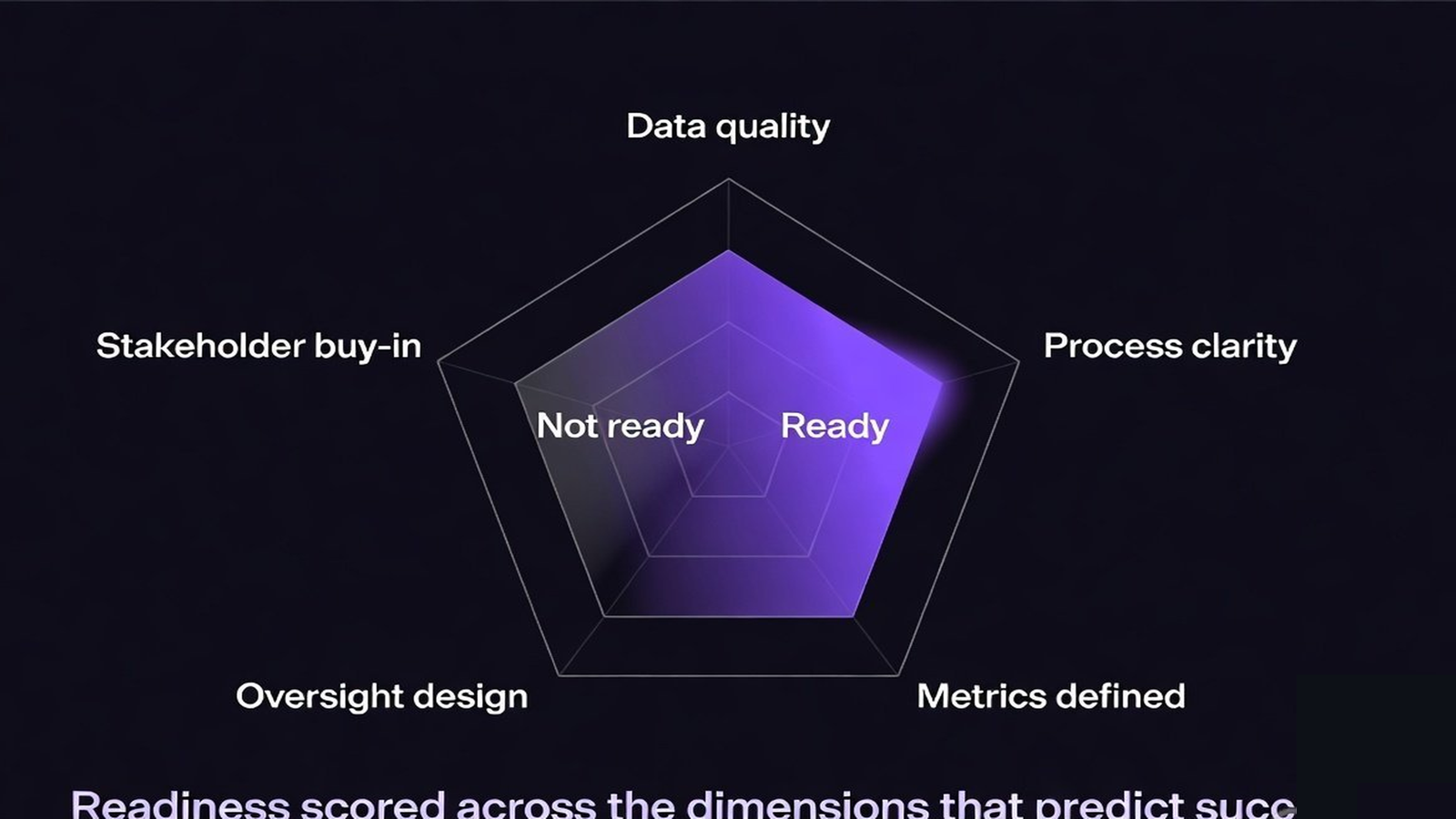
Readiness is not a vibe, it is a small set of measurable conditions that predict whether an agent will deliver once it scales. Is the data the agent depends on clean and accessible or scattered and stale? Is the target process stable enough to teach or does it change weekly? Does the team have the capacity to oversee the agent or is the human in the loop already underwater? And can you state what success looks like in a number or is the goal a slogan? Score those honestly and you can see, before you spend, which agents are ready to scale and which need work first.
The MIT base rate is the argument for doing this. A 5% measurable-impact rate is not mostly a story about weak models; it is a story about agents pushed to scale in conditions that could not support them. The tau2-bench numbers add the technical half: agent reliability on hard tasks is low enough that oversight capacity is a real readiness dimension, not a nice-to-have. Measuring readiness is how you avoid joining the 95%.
How do you turn readiness into a gate?
| Dimension | Not ready | Ready to scale |
|---|---|---|
| Data | Scattered, stale | Clean, accessible |
| Process | Changes weekly | Stable enough to teach |
| Oversight | Team already underwater | Capacity to supervise |
| Success metric | A slogan | A number you can check |
A readiness gate works only if the agent's behavior is measurable, which is where the Pattern Intelligence Layer comes in. VibeModel makes reliability legible at the pattern level, so "ready to scale" stops being a judgment call and becomes evidence: the agent handles its patterns the same correct way every time, across the volume scaling will bring. That is the difference between scaling on hope and scaling on proof.
Frequently asked questions
Is a readiness score just bureaucracy?
No. It is the cheapest way to avoid joining the 95% of pilots with no measurable impact. A short honest scorecard beats a long failed rollout.
Which dimension fails most often?
Usually a clear success metric. Teams scale agents they cannot actually measure, then cannot defend the spend.
What if readiness is low?
Fix the weak dimension before scaling. An unready agent forced to scale fails louder and more expensively than one held back to get ready.