


Key facts.
- Edmondson's work shows candor and open communication are what build the psychological safety that lets people engage with change rather than resist it. source
- FaithfulRAG shows models often override retrieved context with parametric knowledge, so an honest message about the agent's limits is grounded, not pessimistic. source
Why does silence breed resistance?
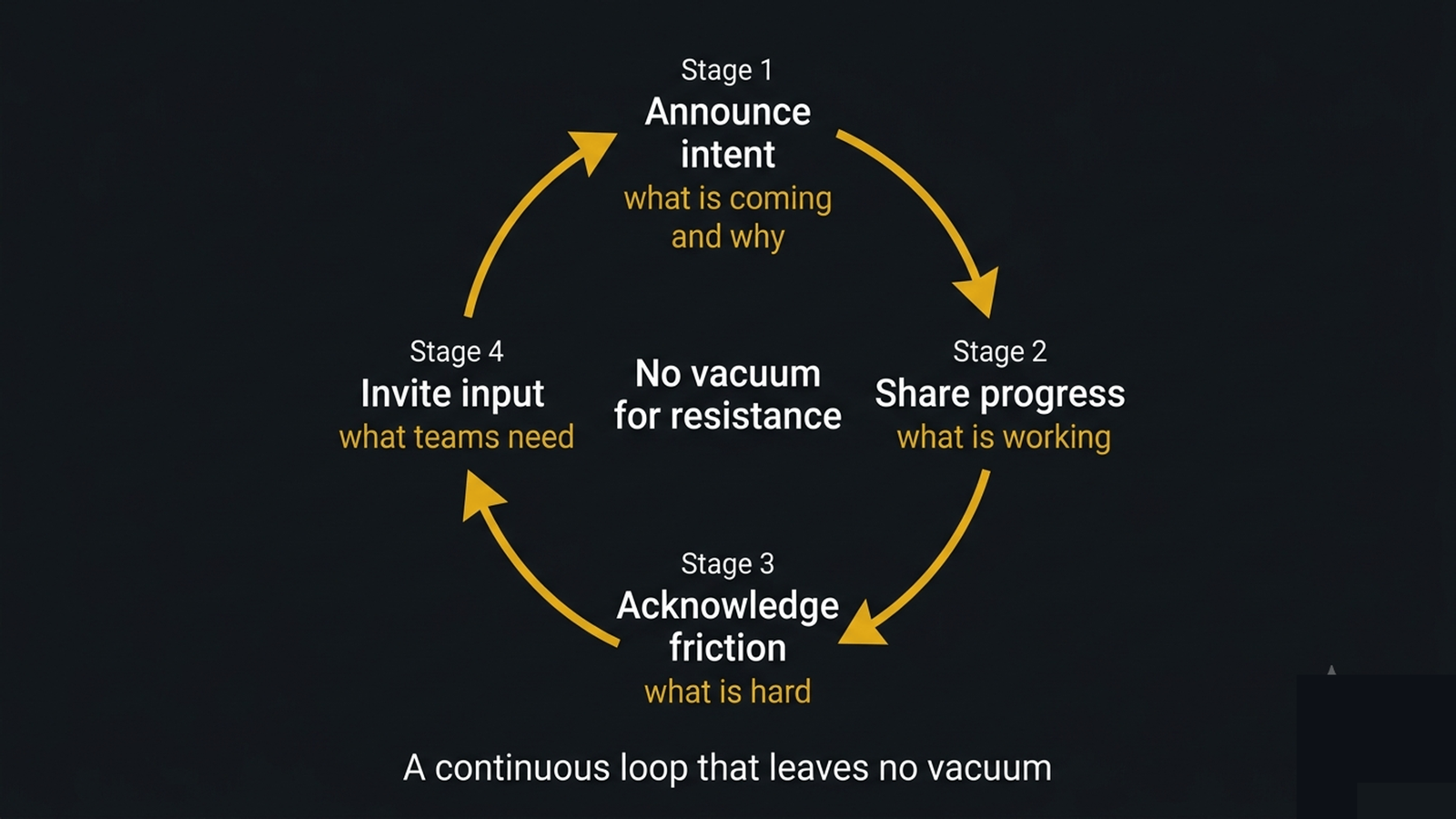
When leadership goes quiet about an agent, people do not wait patiently; they fill the gap with the most threatening story available. No news about role impacts becomes "they are not telling us because it is bad." No word on the agent's limits becomes "they are pretending it is perfect." The vacuum is never neutral. Continuous, honest communication removes the vacuum, not by spinning a positive story but by replacing speculation with specifics: here is what the agent does, here is what it cannot, here is what changes for you and what does not. Specifics are harder to fear than silence.
Transparency about limits is the part teams most often skip and most need. The FaithfulRAG finding is a good example of a limit worth naming: the agent can ignore the very documents it was given and answer from its training instead, producing a confident wrong answer. Telling people that and what to check because of it, does three things at once: it is honest, it makes the agent safer because people verify the right things and it builds the candor that psychological safety runs on. An organization that communicates the limits openly gets trust; one that hides them gets the resistance that silence and overselling both produce.
What does the communication cover?
| Topic | Silence | Continuous honesty |
|---|---|---|
| What the agent does | Vague | Specific and concrete |
| What it cannot do | Hidden | Named, with what to check |
| Role impact | Unspoken, feared | Stated honestly |
| Cadence | One launch memo | Ongoing |
Communicating the agent's real limits honestly is easier when those limits are legible, which is what the Pattern Intelligence Layer provides. VibeModel makes clear where the agent is reliable and where it is not at the pattern level, so the message you give people is accurate, this it handles, this it routes to you and the transparency that defuses resistance is backed by real behavior rather than reassurance you cannot keep.
Frequently asked questions
Won't naming the limits scare people?
Less than silence does. People fear the unknown more than a named, bounded limit they can work around. Honesty builds the trust that overselling destroys.
How often should you communicate?
Continuously, not once at launch. Resistance regrows in any new silence, so the cadence has to be ongoing.
What limit is most important to name?
The confident wrong answer, like the unfaithful-RAG behavior FaithfulRAG documents, so people know to verify rather than assume the agent is always right.