


Key facts.
- WebArena agents achieved 14.41% task success on real web environments; humans scored 78.24%, a 5x gap even before multimodal complexity is added (WebArena, arXiv:2307.13854).
- HammerBench found that when function arguments are ambiguous or partially missing, LLMs hallucinate parameter names rather than requesting clarification, across all tested frontier models (HammerBench, arXiv:2412.16516).
- In voice agents, ASR word error rates above 5% cause cascading tool parameter errors in customer service workflows, particularly on proper nouns, account numbers, and product codes reported in production incident analyses.
- Vision grounding failures - where an agent identifies the wrong UI element or misreads a document field - lead to tool calls with valid-format but semantically wrong parameters that pass schema validation silently.
- WildToolBench (arXiv:2604.06185) found no frontier model achieves more than 15% session accuracy on multi-turn tool-use tasks, and multimodal tasks were among the hardest categories.
- Top browsing agents finish 14.4 percent versus 78.2 for humans; a more capable model widens that gap, not closes it. (arXiv:2307.13854)
Why the failure mode is fundamentally different
A text-only agent that calls a search tool with the wrong query gets back irrelevant results and has a chance to recover. A voice agent that mishears "account number 4471" as "4417" and calls a payment tool with that number has committed an action based on a transcription artifact, not model reasoning. The model performed perfectly - it called the right tool with exactly what it heard. The failure is structural.
Vision agents compound this. An agent looking at a blurry invoice might extract "Invoice INV-2024-0891" from one field and miss that it is a credit memo, not an invoice. The tool call will succeed. The business outcome will be wrong. No 200-level response code will tell you anything went sideways.
The parameter error cascade
In multimodal customer service deployments, tool parameter errors cluster around three sources: transcription uncertainty (5-15% word error on domain-specific vocabulary), OCR ambiguity on structured document fields (dates, amounts, IDs), and cross-modal context disagreement where what the customer says does not match what a screenshot of their account shows. Agents trained on clean text benchmarks have no exposure to this distribution.
HammerBench's key finding is instructive here: LLMs do not request clarification when arguments are uncertain, they fill in values based on their internal model of the world. In a multimodal context, "the world" includes a potentially mistranscribed audio stream or a blurred document field. The model is confident. The parameter is wrong. The tool call succeeds. The customer's issue is not resolved.
What production multimodal deployments do differently
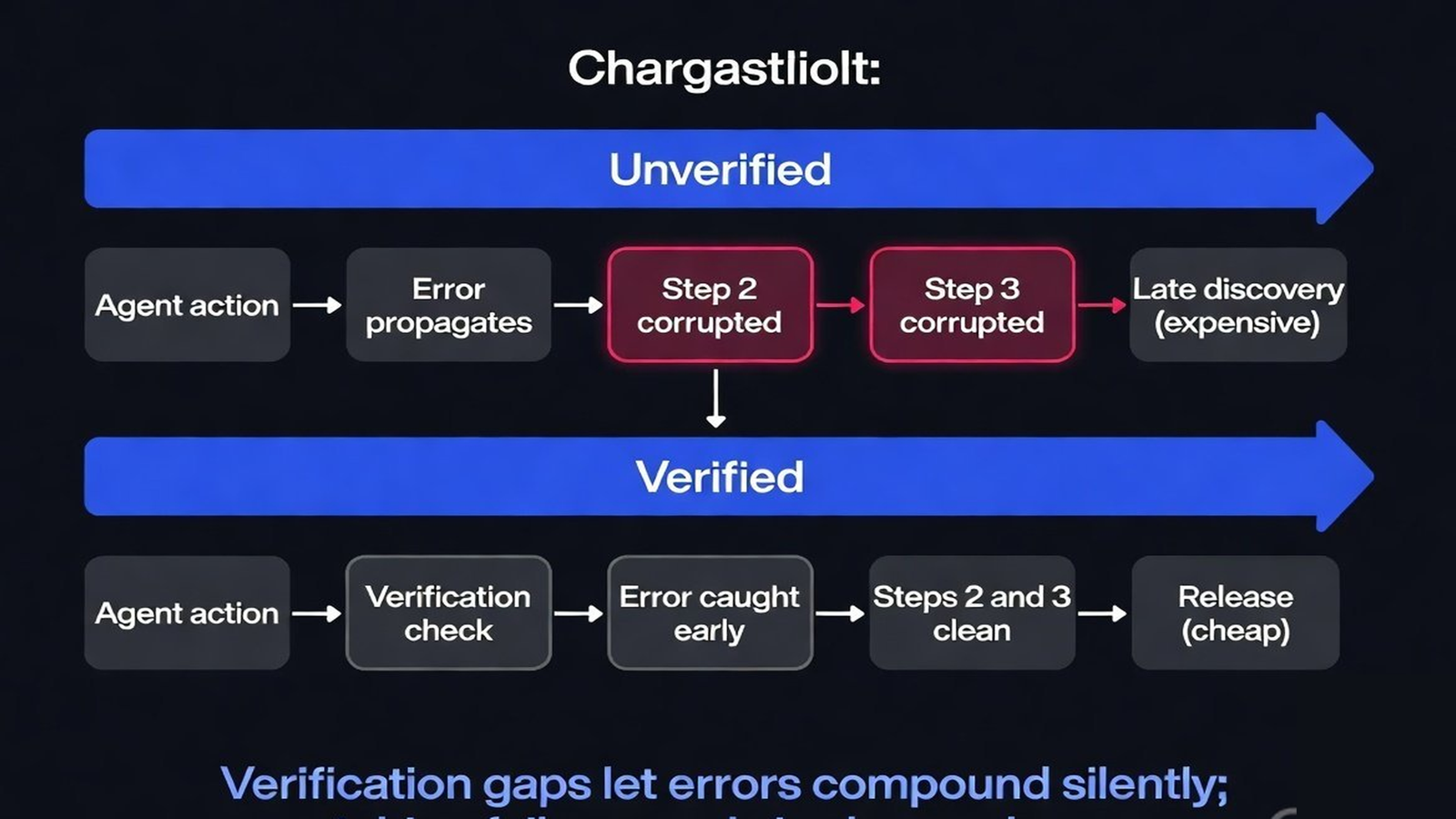
Teams that get this right treat multimodal input confidence as a first-class signal. Before any tool call, a confidence gate checks: ASR confidence above threshold, vision extraction field-level confidence score, and cross-modal consistency (does what the customer said match what their account record shows). Any leg below threshold triggers a clarification request rather than proceeding to tool invocation. This is not a model capability feature. It is an architectural decision made outside the model.
Failure patterns by input modality
| Input type | Primary failure mode | Typical detection method | Recovery path |
|---|---|---|---|
| Text | Ambiguous intent | Low-confidence intent score | Clarification prompt |
| Voice (ASR) | Transcription error on domain terms | ASR confidence + field validation | Readback and confirm before tool call |
| Vision (OCR) | Field misread on structured documents | Field-level OCR confidence | Manual review flag or re-capture |
| Multimodal combined | Cross-modal disagreement | Cross-modal consistency check | Escalation to agent or human |
VibeModel's Pattern Intelligence Layer identifies which tool call signatures are high-risk in multimodal flows by learning the patterns of parameter errors that precede failure outcomes. When transcription confidence on a payment-related field falls below a learned threshold, the system routes to confirmation before executing. That single pattern gate prevents the class of silent failures that kill trust in multimodal deployments before they ever scale.
Frequently asked questions
Do voice agents fail more than text agents on the same underlying tasks?
Yes, because transcription introduces a parameter error source that has nothing to do with model reasoning quality. The same task with clean text input succeeds at a higher rate than with voice input through an ASR system with any meaningful error rate on domain vocabulary.
Can confidence thresholds fully prevent multimodal tool call errors?
Not fully, but they reduce them substantially. The key is treating input confidence as a gate on tool invocation, not just a logging signal. ASR and OCR confidence scores exist in most commercial systems; they are just not wired to tool call authorization by default.
How do you test multimodal tool calls in pre-production?
You need test corpora that include realistic ASR errors and OCR ambiguity, not clean transcripts. Record actual customer calls, introduce realistic ASR artifacts, and measure how often tool parameters change compared to clean-text equivalents. That gap is your production risk.