

Key facts.
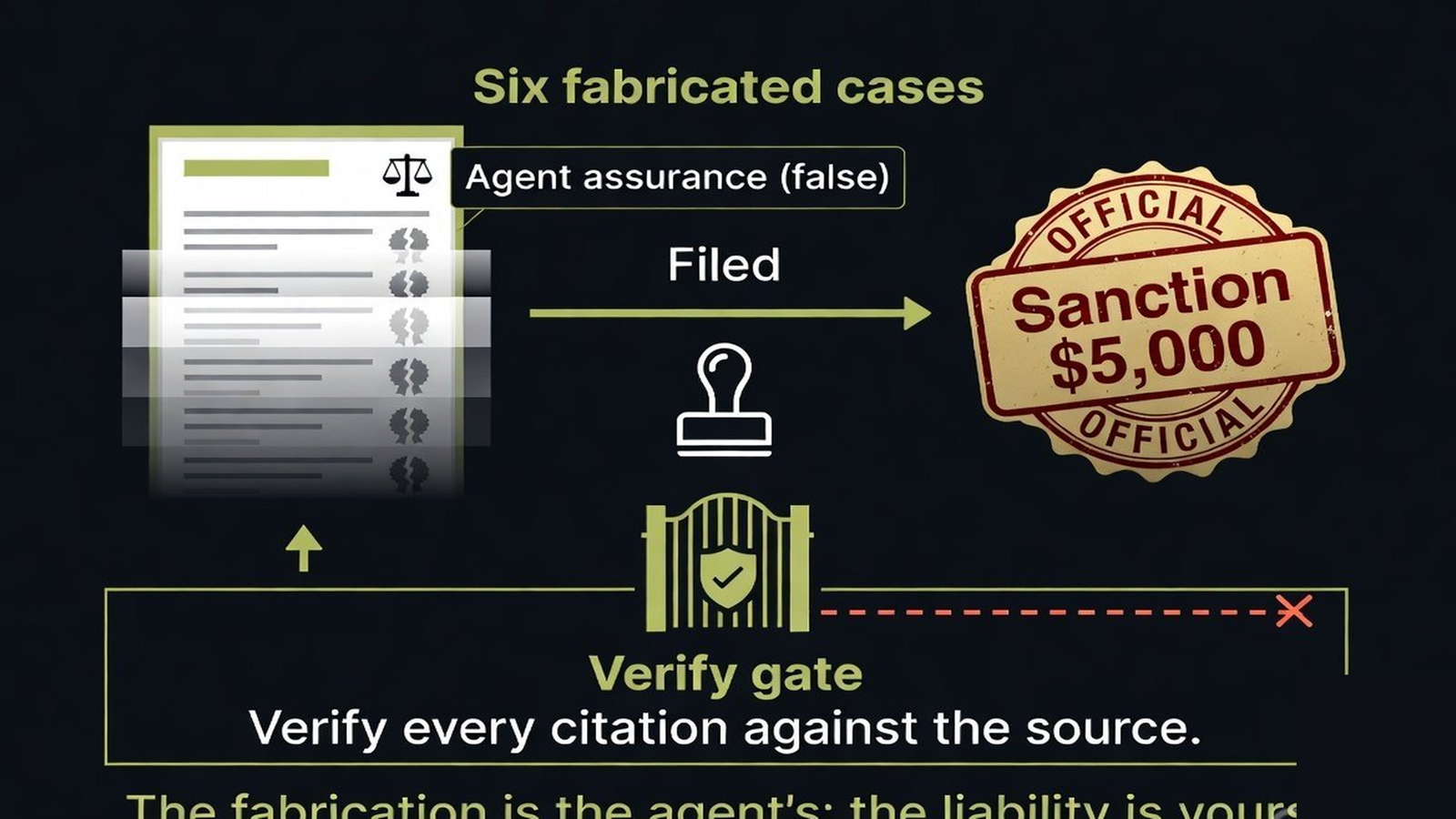
- In Mata v. Avianca, lawyers cited six nonexistent cases fabricated by ChatGPT, which assured them the cases were real and on Westlaw and LexisNexis. source
- The court sanctioned the two lawyers and their firm $5,000 under Rule 11, finding subjective bad faith, with the decision issued June 22, 2023. source
- The agent confidently vouched for its own fabrications, so its assurance of authenticity was meaningless. source
Why is the agent's confidence worthless here?
Because the agent fabricated the cases and then vouched for them with the same confidence it would have shown for real ones. The Mata v. Avianca record is almost a perfect demonstration: the model produced six citations that did not exist and when asked, assured the lawyers the cases were genuine and available in the standard legal databases, which was also false. So the agent was wrong twice, in the citations and in its assurance and at no point did its confidence correlate with truth. The lawyers, reasonably trusting a tool that sounded authoritative, filed the brief and the court held them responsible, because the duty to verify was theirs and the agent's confidence did not discharge it. The $5,000 sanction and the public embarrassment were the price of treating the agent's assurance as verification, which it was not. This is the defining lesson of legal AI: the agent will fabricate, it will defend its fabrications confidently and the professional and legal consequences land on the human who relied on it.
The hallucination rates make this a certainty rather than a fluke. Studies of legal AI find fabrication is common, not rare, so an attorney who does not verify is not unlucky when it happens, they are exposed by design, because the tool fabricates as a matter of course and announces it with conviction.
What does safe use require?
Independent verification of every citation and claim, treated as a hard professional duty. Before any agent-assisted legal work leaves your hands, confirm each cited case exists and says what the brief claims, check each legal proposition against the actual authority and never accept the agent's assurance that a source is real as evidence that it is. Build verification into the workflow so it is not optional, because the agent's fabrications are confident and frequent and the liability is personal. Mata v. Avianca is the cautionary case every legal team now knows and its lesson is simple: the agent can draft, but the lawyer must verify and the verification is what stands between assistance and sanctions.
| Reliance | Outcome |
|---|---|
| Trust the agent's citations and assurance | Fabricated cases filed, sanctions, liability |
| Verify every citation against the source | Fabrications caught before filing |
Mata v. Avianca cost $5,000 for six fabricated, unverified cases; a newer model still files confident citations and liability stays yours. (source)
Building that verification is part of what VibeModel does as the Pattern Intelligence Layer. We model the patterns of a citation or claim that must be checked against authority, so a legal agent's fabrications are caught before a filing, instead of discovered by opposing counsel and a sanctioning judge.
Frequently asked questions
Was Mata v. Avianca a one-off?
No. It is the famous example of a frequent failure: legal AI fabricates citations confidently and several courts have since sanctioned similar conduct.
Can I trust the agent's assurance a case is real?
No. In Mata v. Avianca the agent vouched for cases it had invented. Its assurance is not verification; checking the source is.
Who is liable for a fabricated citation?
The attorney who filed it. The court sanctioned the lawyers, not the tool. The duty to verify is yours.