


Key facts.
- Organizations with dedicated executive sponsors are reported to be about 1.8 times more likely to scale AI successfully, so the agent's fate is tied to a role that turns over. source
- The first systematic study of agents in production finds that keeping an agent running is an ongoing operational discipline, vulnerable to any gap in ownership. source
Why does a leadership change kill agents?
Sponsors change and a bigger model does not anchor the agent; the first production study calls staying live a discipline that lapses late. (arXiv:2512.04123)
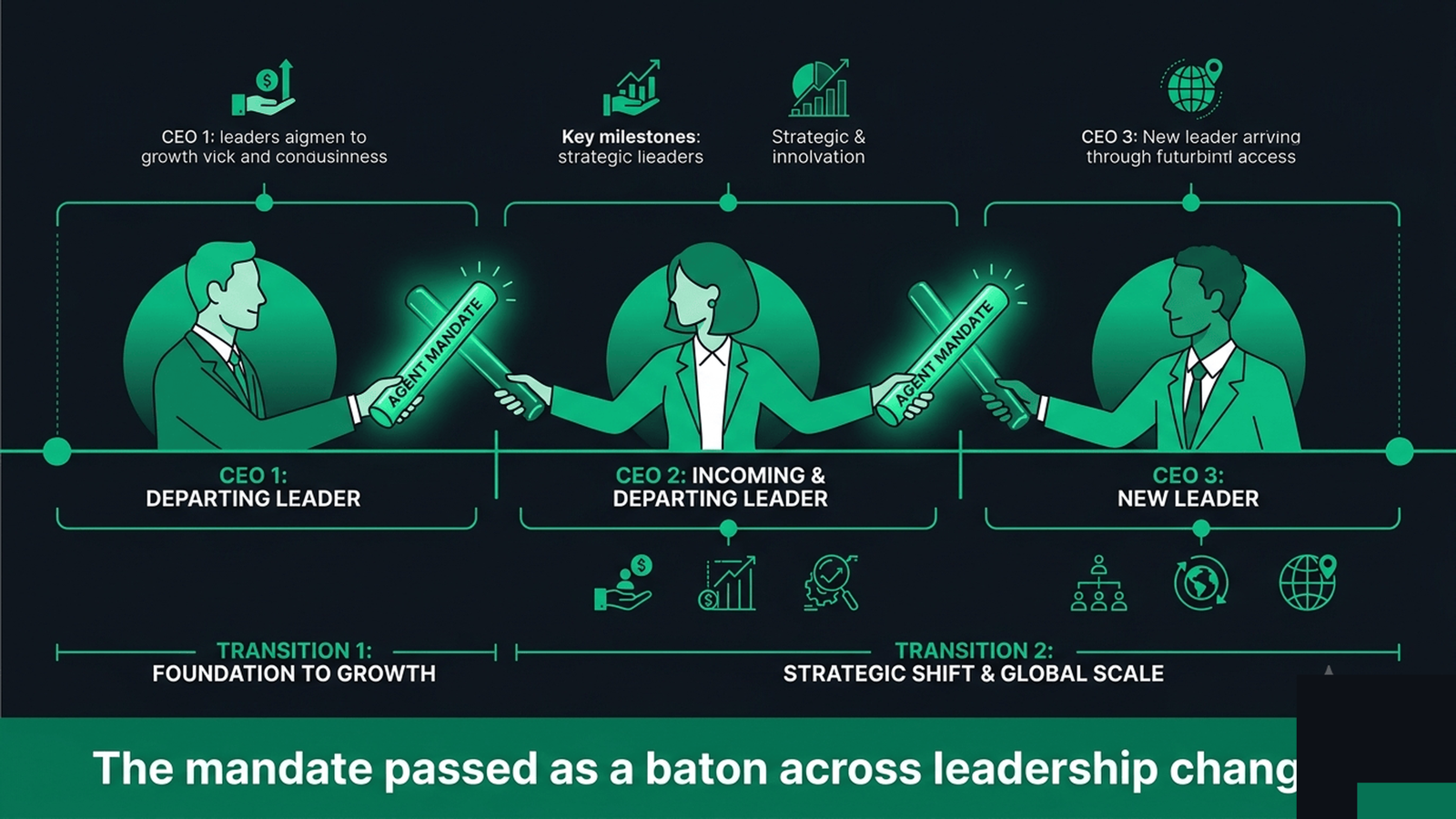
Agent initiatives often ride on a single executive's enthusiasm. That sponsor clears blockers, defends the budget and keeps the project a priority, which is exactly why it works while they are there. When they leave, get reorganized or simply move their attention to the next shiny thing, the agent loses its protector and the inconvenient truth surfaces: nobody else was bought in. The new leader has their own priorities and no stake in the predecessor's project, so the agent slides from priority to legacy to quietly switched off. The 1.8x sponsorship effect is encouraging while the sponsor is present and a liability the moment they are not.
The fix is to make the agent depend on something more durable than one person's interest. Tie it to a documented business mandate that outlives any executive, capture its value in numbers a successor can see and assign an operational owner whose job survives the reorg. The production-agent research is the reminder that this is not set-and-forget: an agent in production needs continuous operational care and that care needs an owner who is structurally there, not a champion who happened to be passionate this quarter.
What makes an agent survive a sponsor change?
| Anchor | Tied to a champion | Tied to a mandate |
|---|---|---|
| Justification | Their enthusiasm | Documented business value |
| Owner | The sponsor personally | A structural operational role |
| On turnover | Loses its protector | Carries on |
An agent survives leadership change when its value is legible enough that a new executive can see why it is worth keeping, which is what the Pattern Intelligence Layer supports. VibeModel makes the agent's reliability and impact visible at the pattern level, so the case for the agent does not live in one sponsor's head, it lives in evidence any successor can read and the initiative outlives the person who started it.
Frequently asked questions
Isn't strong sponsorship a good thing?
Yes, while it lasts. The risk is dependence on one person. Pair the sponsor with a durable mandate and a structural owner so the agent survives their exit.
How do you make value legible to a successor?
Document the agent's measured impact and reliability so a new leader sees the case in evidence, not in the previous champion's enthusiasm.
Who should own the agent operationally?
A structural role that survives reorgs, not the sponsoring executive personally, so continuity does not depend on one career.