

Key facts.
- 2026 AI skills-gap reporting finds demand concentrating in new specializations, AI governance, agentic workflow design and human-AI collaboration, faster than training programs adapt. source
- The "Asleep at the Keyboard" study found about 40% of GitHub Copilot completions were insecure, an example of an AI failure mode teams must stay trained to catch as tools evolve. source
Why does one-time training go stale so fast?
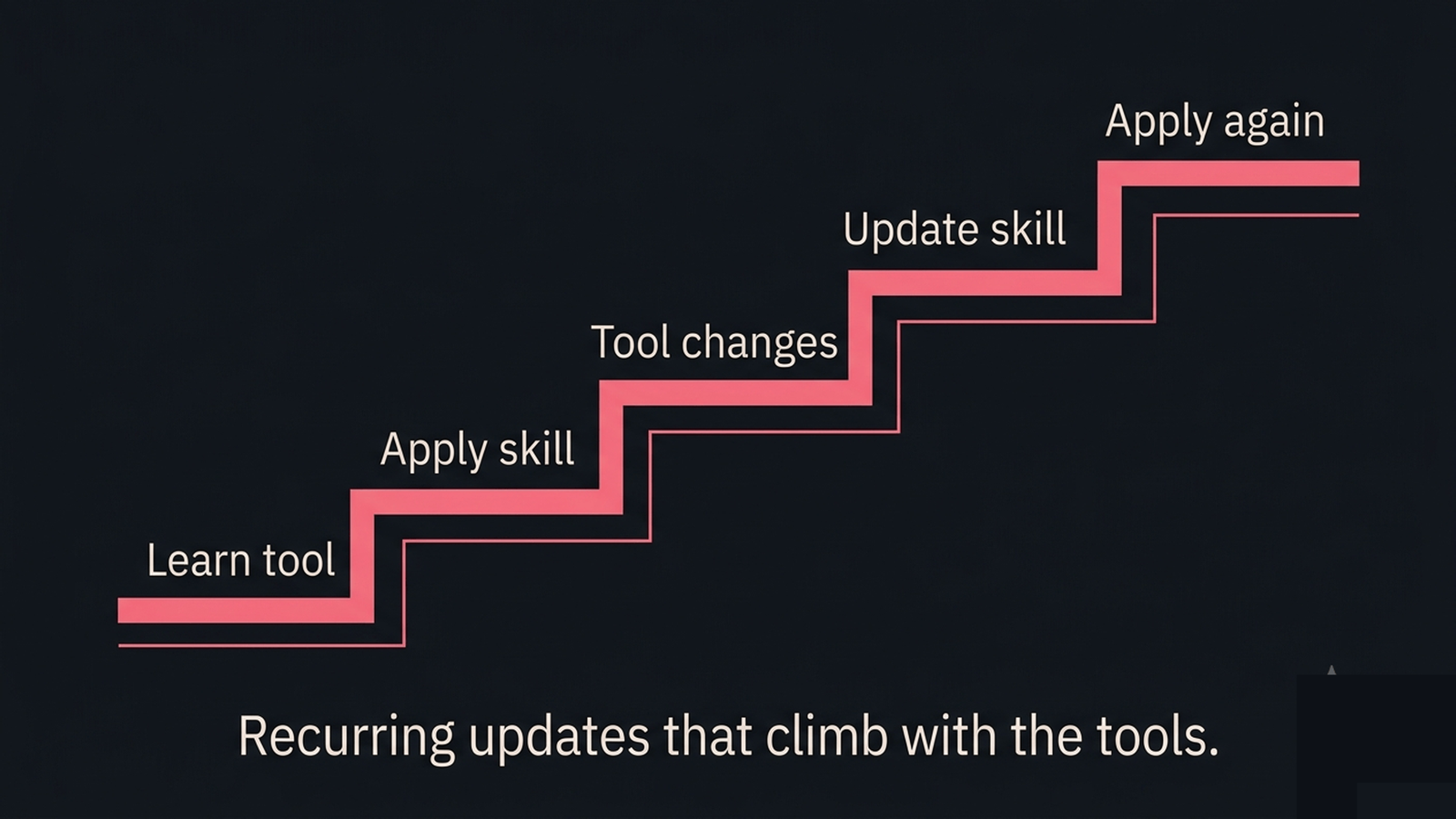
An AI skills course teaches the tools and limits of the moment it was written. Months later the models have changed, new failure modes have appeared and yesterday's best practice is today's anti-pattern, so the people who took the course are now confidently applying outdated knowledge to a system that has moved on. The skills-gap reporting shows how fast the target moves, with demand shifting toward specializations that barely existed a year earlier. A program that trains once and declares the workforce ready has, in effect, trained them for a version of the agent that no longer exists.
The insecure-code finding is a useful reminder that the failure modes do not politely retire either. The specific risks change, but the need for people who can recognize the current ones does not and that recognition has to be refreshed. Continuous skill-building, short, regular updates tied to how the tools actually changed, is what keeps people able to both use the agent well and catch it when it fails in this quarter's new way rather than last year's.
What does a standing skills program look like?
| Aspect | One-time training | Standing program |
|---|---|---|
| Cadence | Once at launch | Regular updates |
| Content | Fixed snapshot | Tracks how tools changed |
| Failure modes | Last year's | This quarter's |
| Result | Stale, overconfident users | Current, capable overseers |
One-time courses go stale fast; a newer model shifts failure modes and insecure AI code persists near 40%, so stale skills cost late. (arXiv:2108.09293)
A standing program is far cheaper to run when you can see exactly how the agent's behavior changed, which is what VibeModel surfaces as the Pattern Intelligence Layer. When shifts in the agent's patterns are visible, training updates can target what actually changed rather than re-teaching everything, so people stay current on the parts that moved and keep their ability to oversee an agent that never stops evolving.
Frequently asked questions
How often should skills be refreshed?
Often enough to track real changes in the tools and failure modes, typically short regular updates rather than an annual course that is stale before it ends.
What should the training cover?
How the agent and its failure modes have changed and how to use and oversee the current version, not generic AI literacy frozen at launch.
Why do old skills become a risk?
Because people apply outdated practice confidently to a changed system, missing new failure modes the way teams once missed insecure generated code.