


Key facts.
- About 95% of enterprise AI pilots fail to deliver expected returns, and under 20% reach enterprise scale (MIT / McKinsey, reported).
- Only 21% of organizations have a mature governance model for autonomous agents, so reviews start from a weak base (CSA, 2025).
- Reviews focus on enforced scope, approval gates, audit logs, and data handling, exactly the controls a demo skips.
Why does the review take so long?
Review stalls pilots over gates, scope, and audit, not capability, and a better model won't shorten the incident: 57 models on WildToolBench, none past 15%. (MIT / McKinsey, reported)
Because the pilot was built to impress, not to be reviewed, so the reviewer finds broad permissions, no enforced gates, and thin logs, then sends it back. Each round costs weeks. The teams that pass quickly invert the order: they build the enforced scope, the gates on irreversible actions, and the audit trail first, so the review confirms controls that already exist instead of demanding ones that do not. Security review stops being a blocker when the pilot was a review candidate from the start.
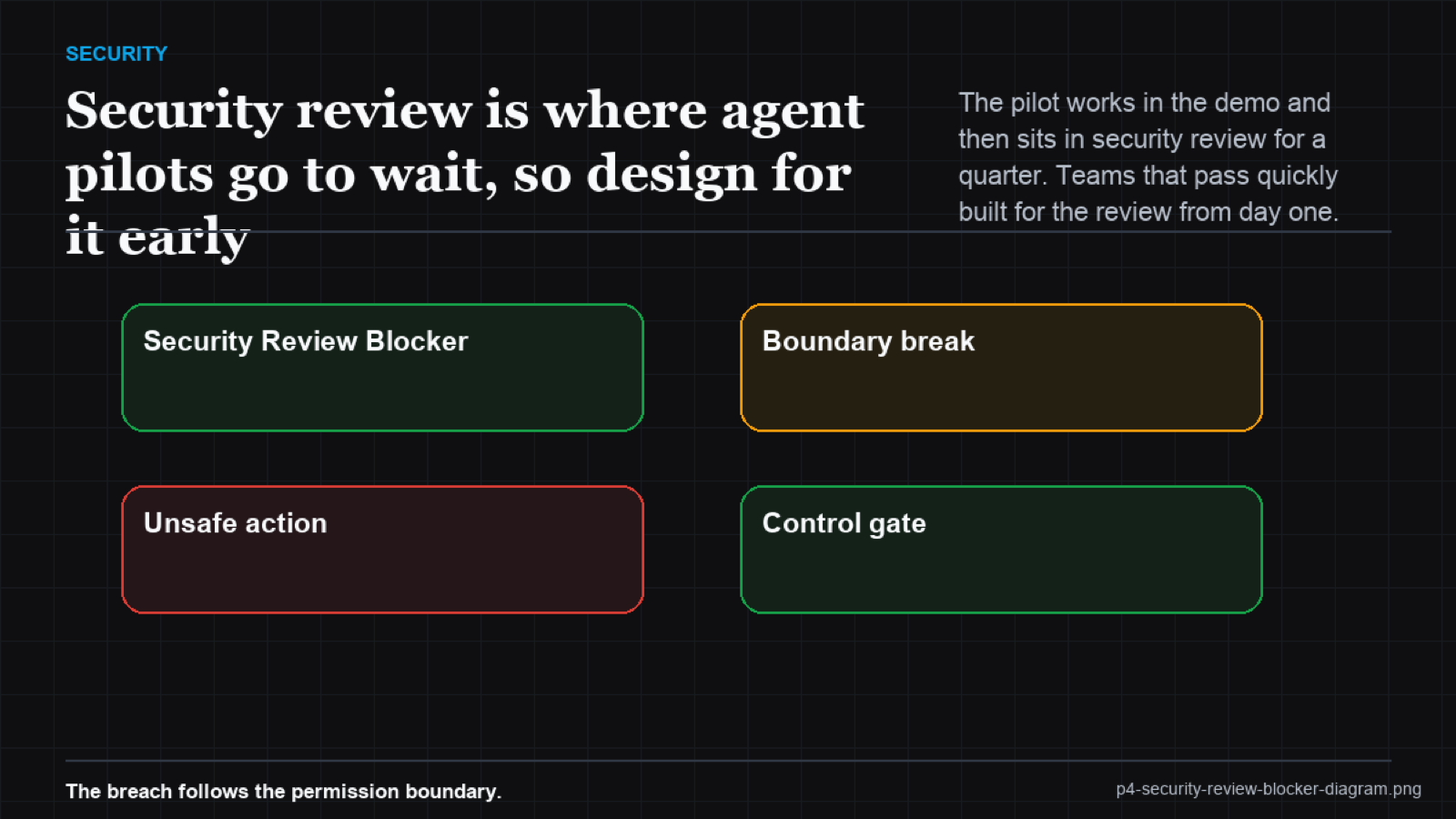
Demo-first vs. review-ready
| Demo-first | Review-ready |
|---|---|
| Broad permissions, no gates | Enforced scope and gates built in |
| Thin or mutable logs | Immutable audit trail from day one |
| Bounces through review for a quarter | Clears review on the first pass |
VibeModel's Pattern Intelligence Layer gives the security reviewer what they look for: enforced behavioral boundaries, gated high-impact actions, and a complete record of why each action was allowed. You build the controls early; we make them observable and provable. The fastest way through security review is to have nothing for the reviewer to send back.
Frequently asked questions
What does a reviewer ask for first?
Enforced scope, gates on irreversible actions, an audit trail, and data-handling controls. Have all four ready before you submit.
Can I retrofit these after the pilot?
You can, but it is slower and the review bounces meanwhile. Building them in is what separates a one-pass review from a quarter of waiting.